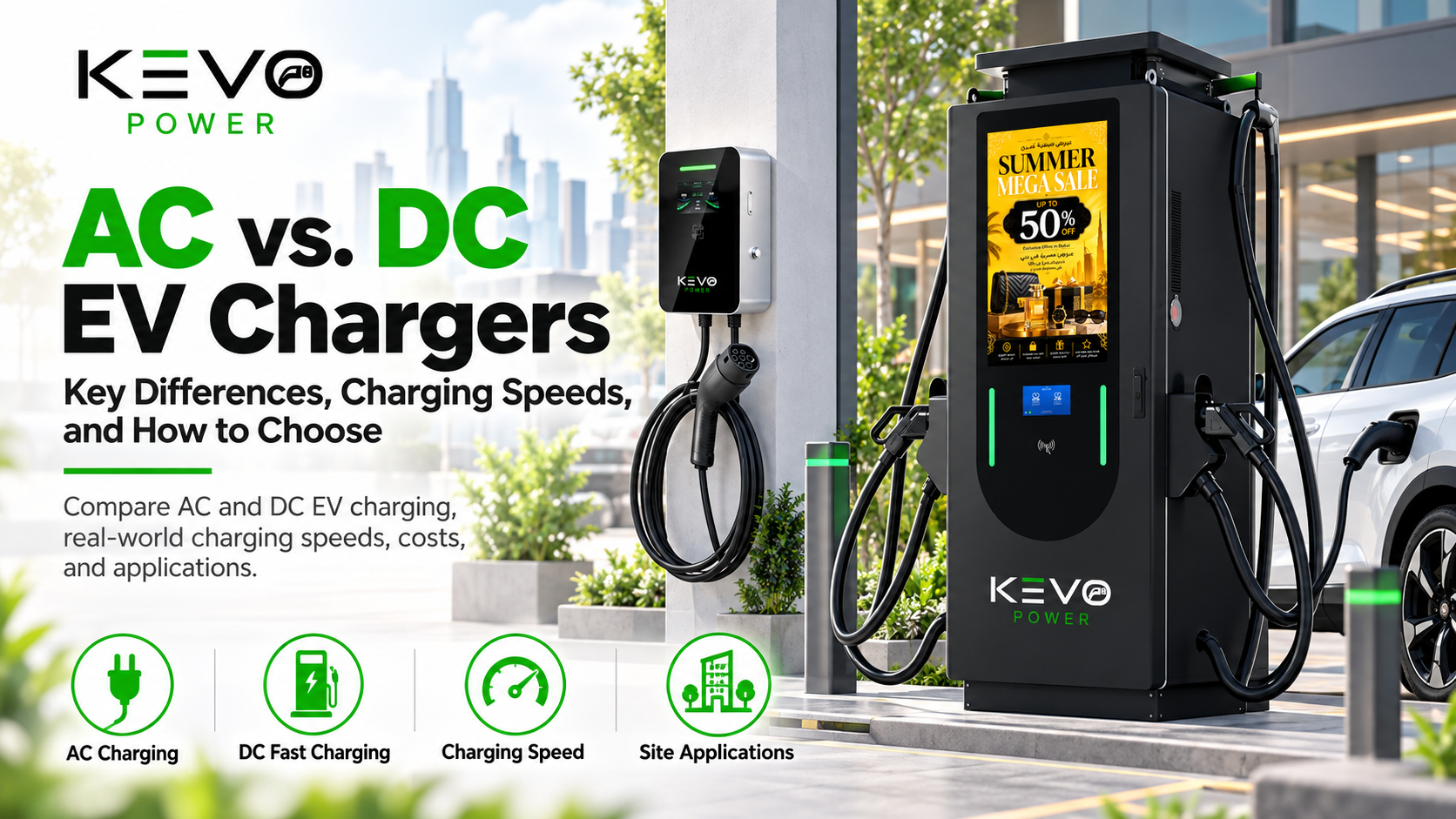
AC vs DC EV chargers serve different parking patterns and business goals. Should you choose an AC EV charger or a DC fast charger? The best answer depends less on the highest advertised power rating and more on how long vehicles typically park, what electrical capacity is available, and what drivers expect from the site.
For homeowners, charging overnight is usually the priority. For charge point operators (CPOs), fleet managers, hotels, workplaces, and distributors, the calculation also includes installation cost, utilization, maintenance, and long-term business value. This guide explains the technical difference between AC and DC charging and shows how to choose a practical solution for each location.
This guide helps buyers compare AC EV charger solutions and DC fast charging solutions for real projects.
What Is the Difference Between AC and DC EV Charging?
Electric vehicle batteries store direct current (DC), while electricity supplied by the grid is generally alternating current (AC). The key difference is where that conversion happens.
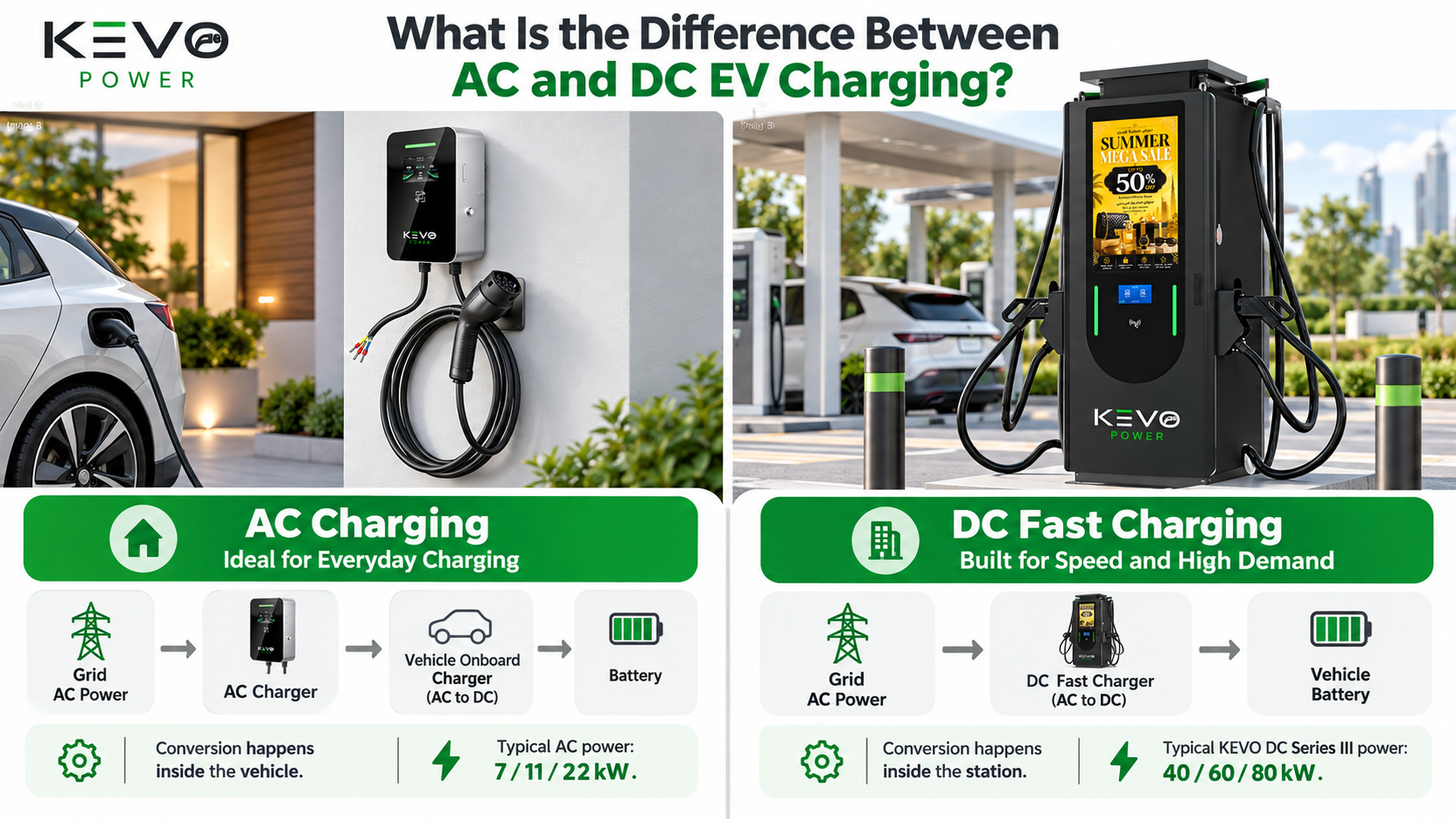
AC charging: the vehicle converts the power
Grid AC power → AC charging station → vehicle onboard charger (AC-to-DC conversion) → battery.
An AC charger supplies controlled AC power to the vehicle. The vehicle’s onboard charger (OBC) performs the AC-to-DC conversion. Because charging power is limited by the OBC, electrical supply, and charger rating, a 22 kW AC wallbox will not necessarily charge every vehicle at 22 kW.
DC fast charging: the station converts the power
Grid AC power → DC fast charging station (AC-to-DC conversion) → vehicle battery.
A DC fast charger performs the conversion inside the charging station and supplies regulated DC power to the vehicle, bypassing the onboard AC charger. Actual power still depends on the vehicle’s DC charging capability, battery state of charge, temperature, charging curve, and station conditions.
AC vs. DC EV Chargers: Comparison at a Glance
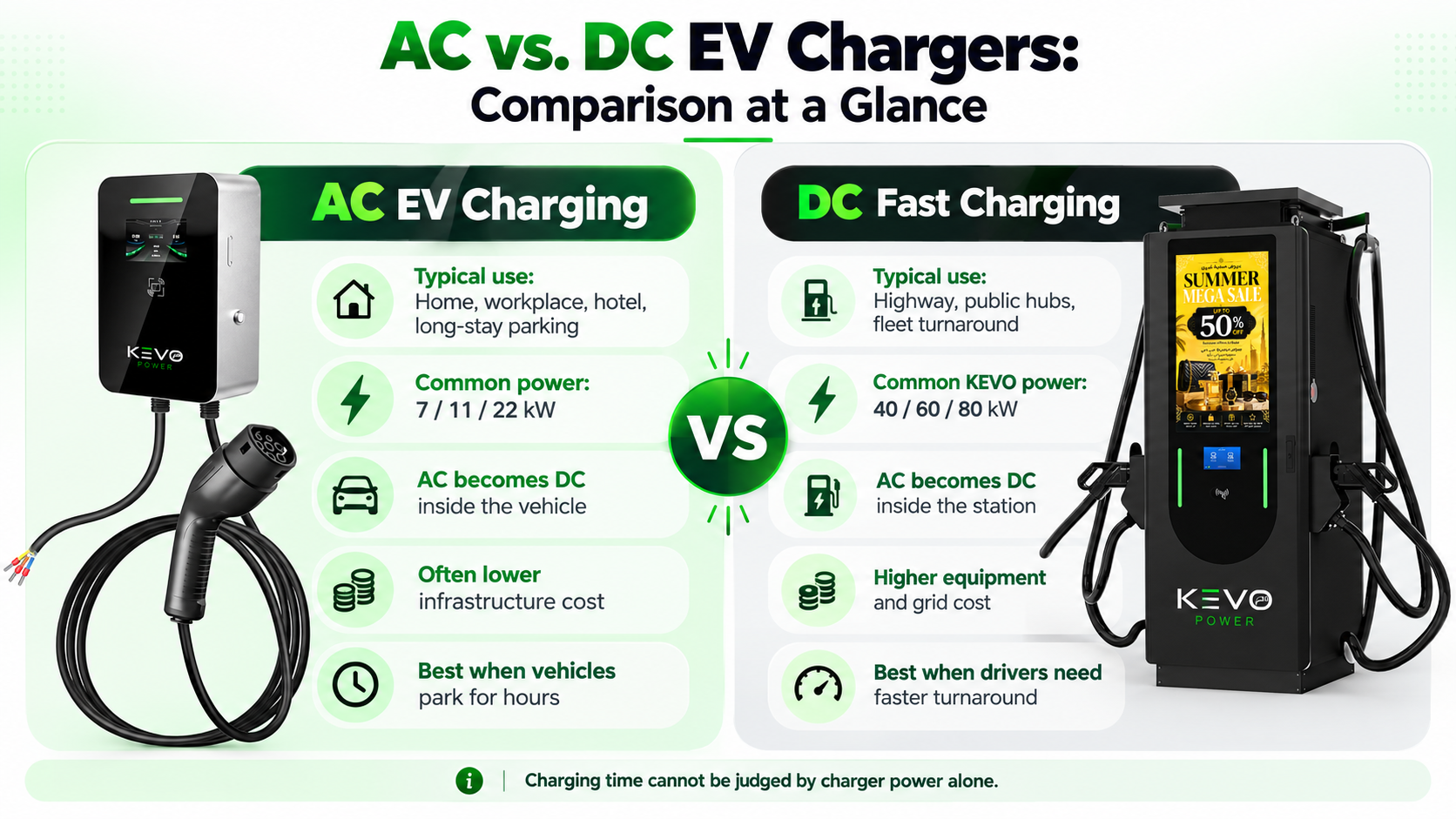
| Factor | AC EV Charging | DC Fast Charging |
|---|---|---|
| Typical use | Home, workplace, hotels, long-stay parking | Highways, public charging hubs, fleet turnaround |
| Common power levels | 7 / 11 / 22 kW | 60–240 kW for KEVO Series VI; other ratings exist |
| Where AC becomes DC | Inside the vehicle (OBC) | Inside the charging station |
| Typical parking pattern | Several hours or overnight | Shorter stops and higher turnover |
| Infrastructure investment | Often lower equipment and installation costs | Typically higher equipment and grid-connection costs |
| Key purchasing consideration | Vehicle OBC, phase supply, access control | Vehicle DC limits, site power, uptime, operations |
Charging time cannot be determined from charger power alone. For example, a 60 kWh battery receiving a constant 10 kW would theoretically need about six hours to add 60 kWh before losses; real charging varies with battery condition, vehicle limits, and tapering.
When Should You Choose an AC EV Charger?
AC charging is usually the more economical fit when vehicles remain parked long enough to charge gradually. Common applications include private garages, apartments, workplaces, hotels, and long-stay visitor parking. AC is not limited to residential settings: commercial properties may also use networked AC chargers when utilization and parking duration support that choice.
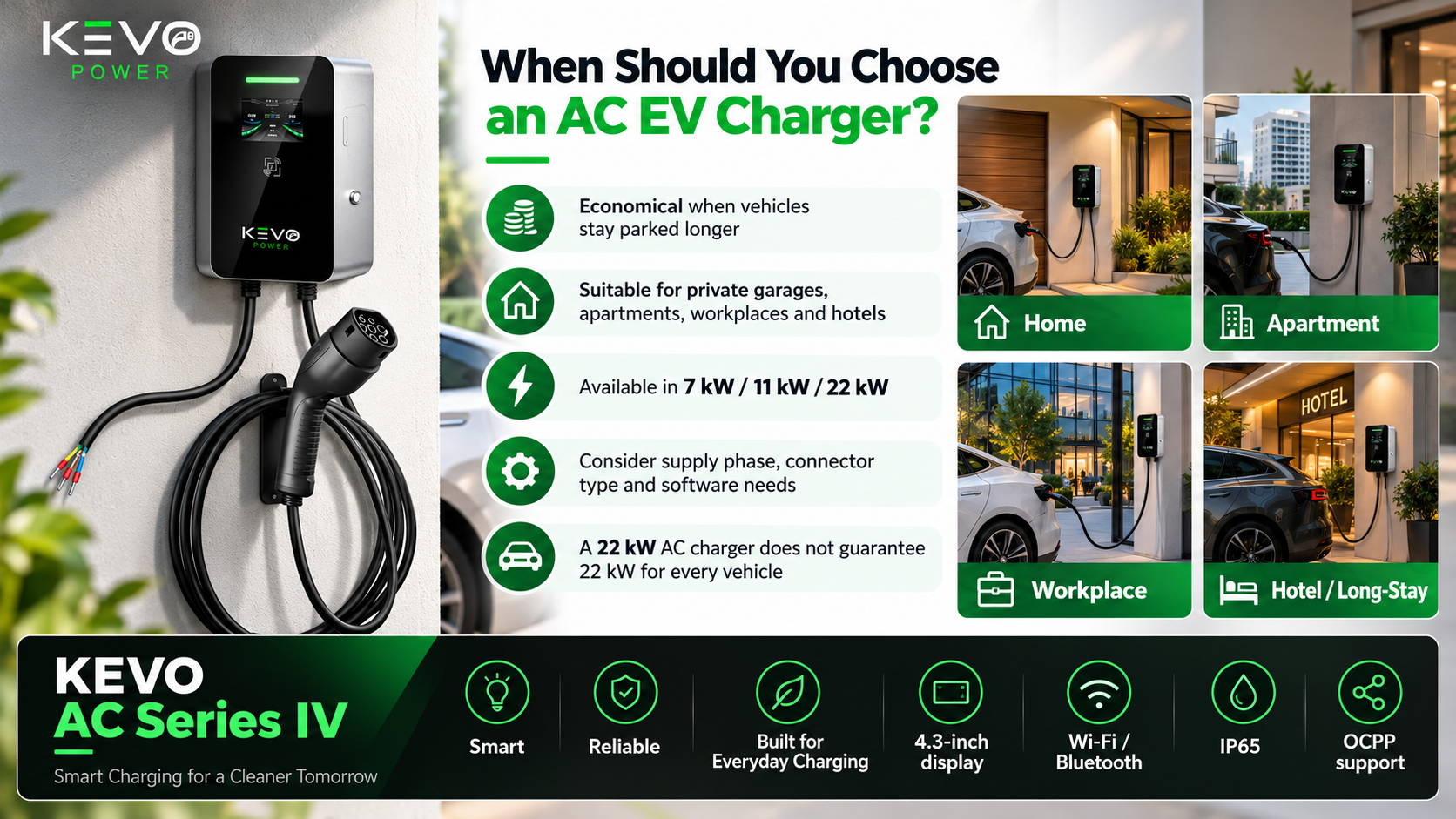
Residential AC charging
- Match power to the vehicle and home electrical supply; 7 kW, 11 kW, and 22 kW options serve different markets and grid configurations.
- Consider scheduled charging, app connectivity, and electrical protection, subject to model configuration.
- Choose cable-attached or socket versions according to local customer expectations and connector standards.
KEVO Power product example: AC Series IV
The KEVO Power AC Series IV offers 7 kW, 11 kW, and 22 kW wall-mounted versions with tethered-cable or socket options. Its published features include a 4.3-inch display, Wi-Fi/Bluetooth connectivity, IP65 enclosure rating, and OCPP support. Explore the AC Series IV specifications.
For distributors and installers, this range supports different power requirements without treating 22 kW as a universal speed guarantee. Confirm the required AC connector (such as Type 1, Type 2, or GB/T), available supply phase, and the buyer’s preferred software features before placing an order.
When Is a DC Fast Charger the Better Investment?
DC fast charging is designed for sites where drivers value shorter stops or where fleets need faster turnaround. Typical locations include highway service areas, fuel stations, public fast-charging hubs, logistics facilities, and selected high-traffic commercial destinations.

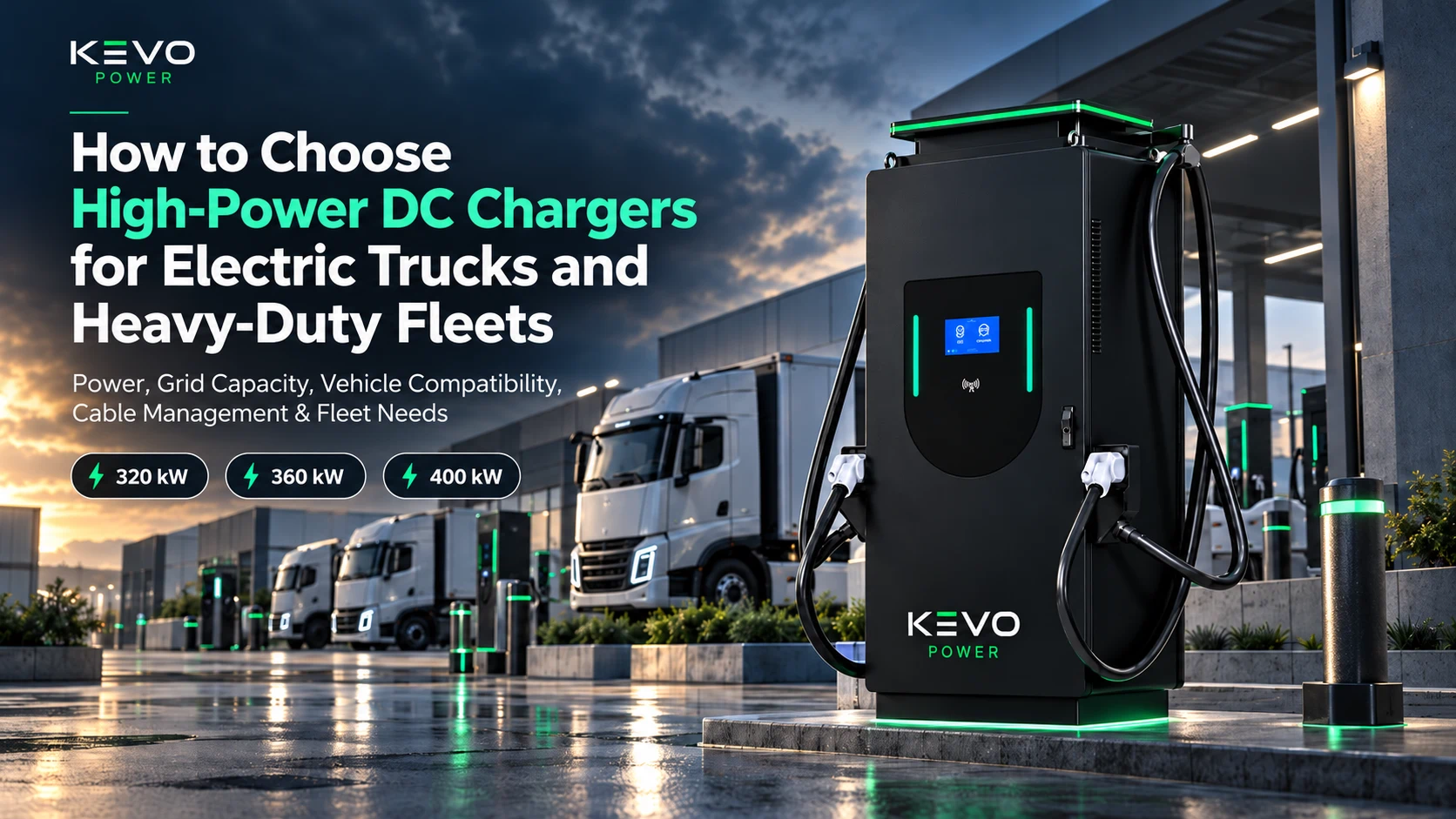
A successful DC charging project requires more than a high headline kW rating. Operators should evaluate projected vehicle traffic, available grid capacity, installation and demand charges, connector standards, payment integration, remote monitoring, and local service capability.
KEVO Power product example: DC Series VI
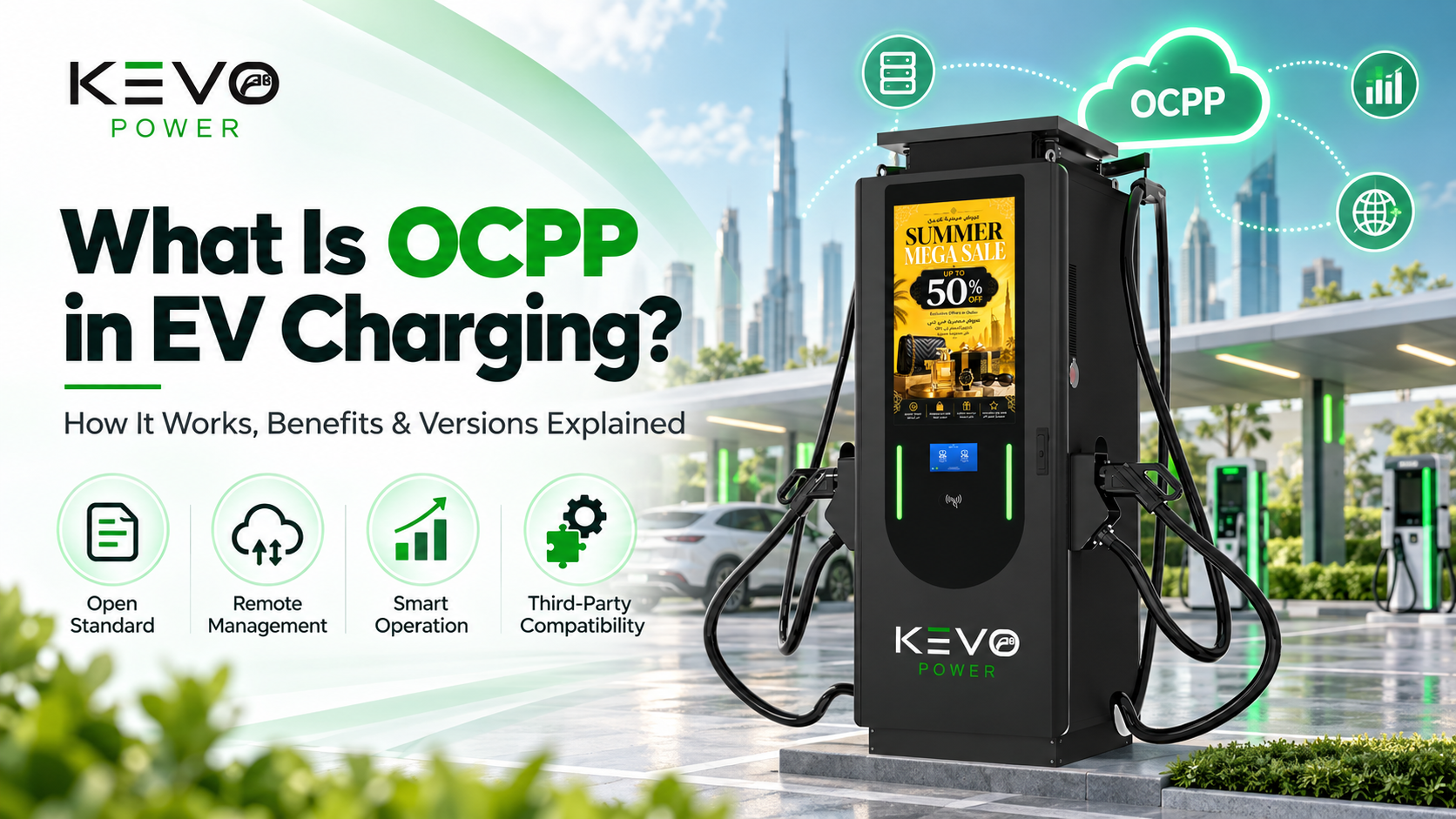
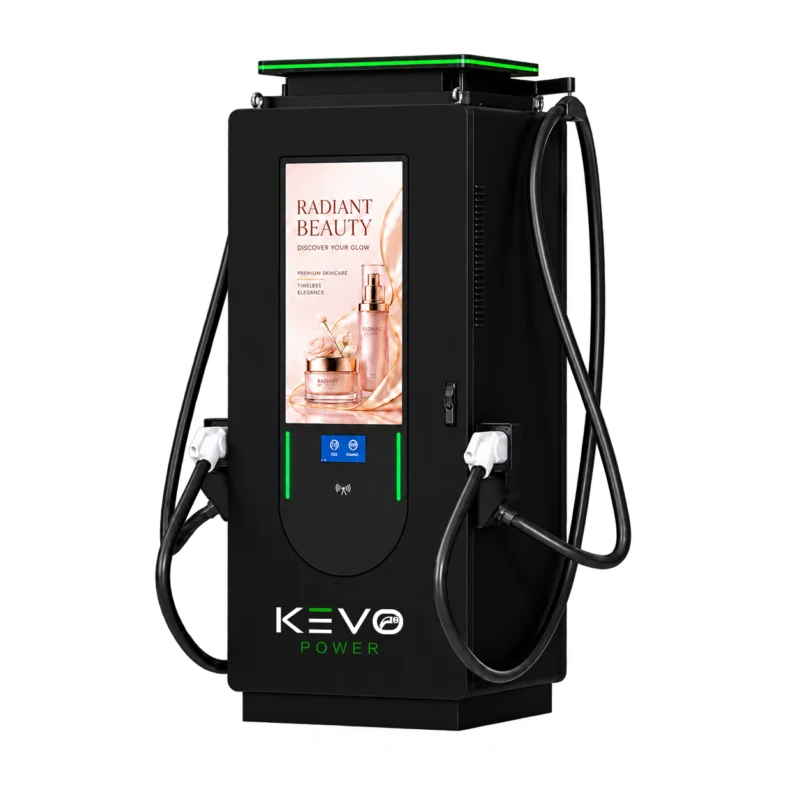
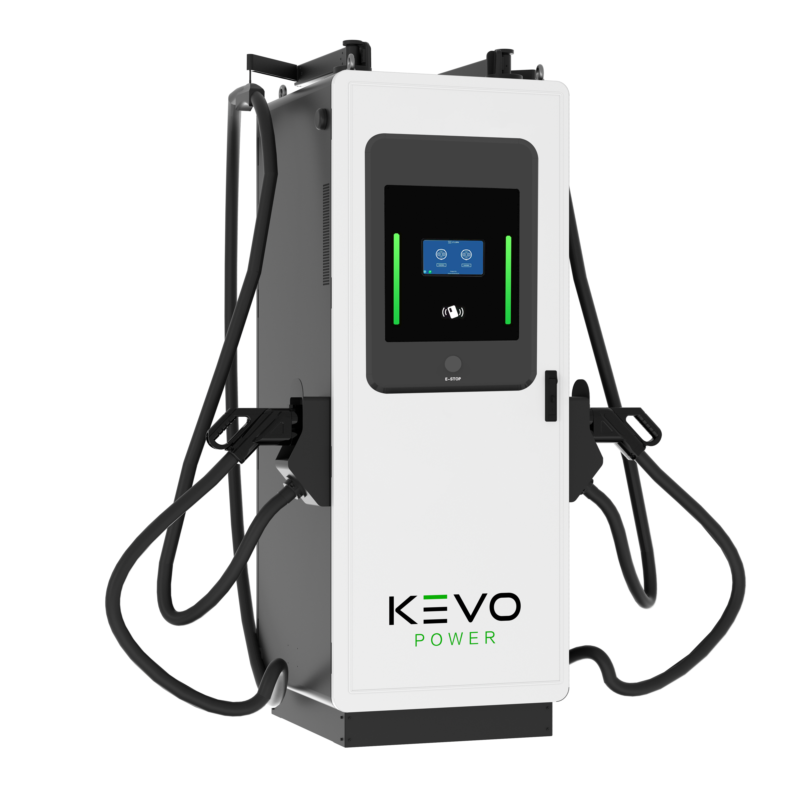
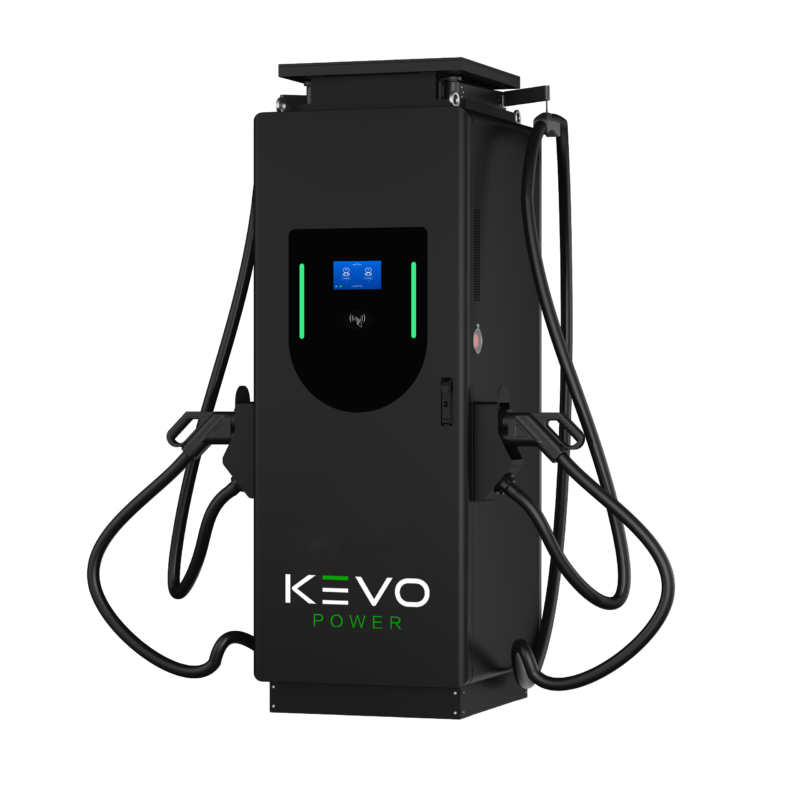
KEVO Power DC Series VI is offered in 60, 80, 120, 160, 180, and 240 kW configurations. The product page lists a 32-inch advertising display, OCPP 1.6J/2.0.1, 4G/Ethernet/Wi-Fi connectivity, IP54 protection, and modular power-module architecture. View DC Series VI configurations.
The 32-inch display creates an opportunity for site messaging, promotions, or advertising, subject to local commercial arrangements. For CPOs, modular power modules can simplify fault isolation and on-site servicing; continued operation depends on the fault type and system conditions.
How Should Businesses Choose Between AC and DC Chargers?
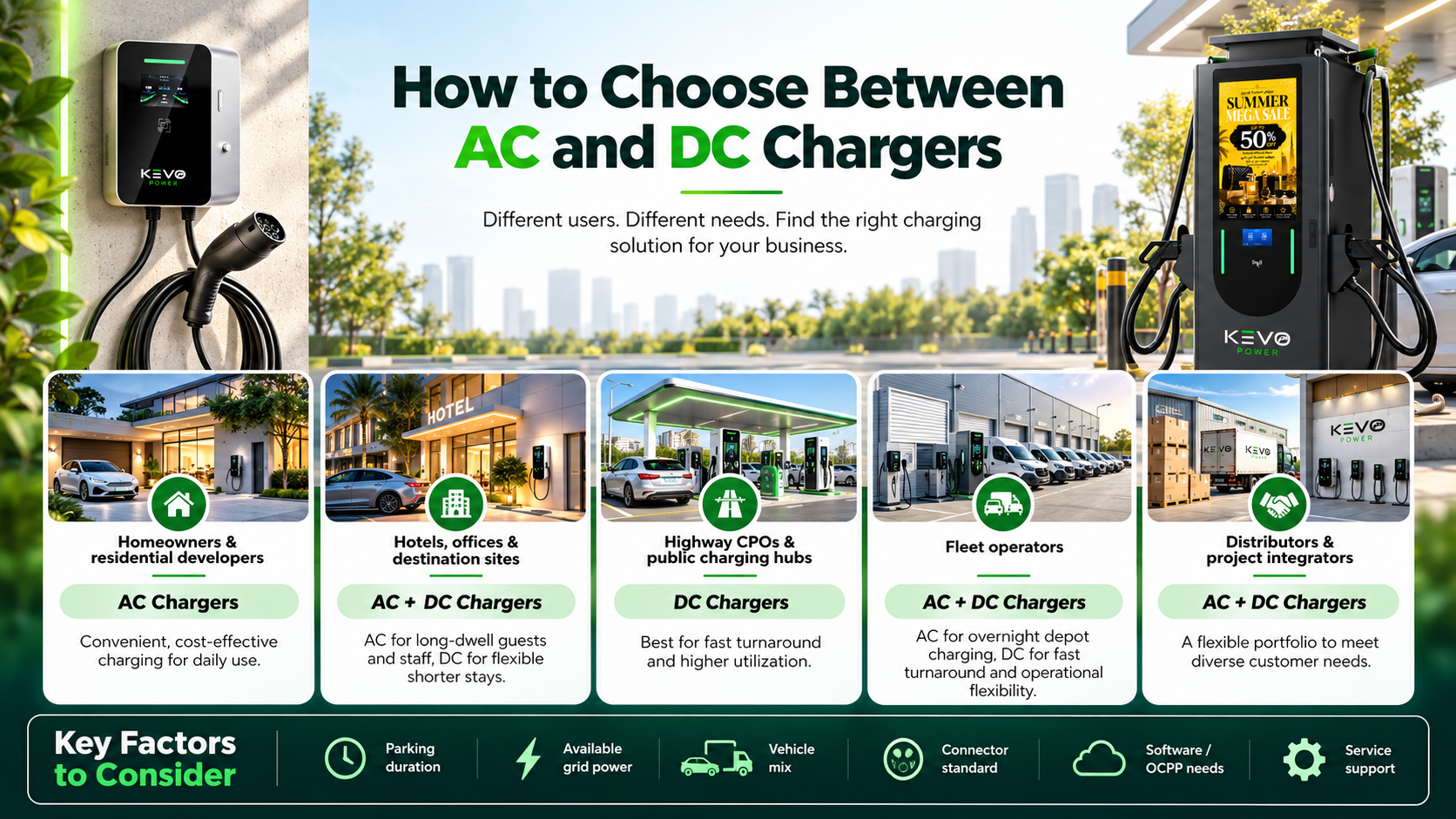
Homeowners and residential developers
Favor AC when overnight or long-duration parking is available. Prioritize safe electrical installation, appropriate power, ease of use, and connector fit.
Hotels, offices, and destination sites
Consider AC for guests or staff parking for several hours. Add DC only where rapid top-ups and projected use justify the additional infrastructure investment.
Highway CPOs and public charging hubs
Prioritize DC where drivers expect shorter visits. Compare revenue potential against grid upgrades, maintenance, network uptime, and payment requirements.
Fleet operators
Map actual parking and dispatch schedules. Overnight fleet depots may use AC or lower-power DC; high-turnover operations may require higher-power DC.
Distributors and project integrators
Check regional charging standards, OCPP/CSMS compatibility, operating environment, certification requirements, service parts, and OEM/ODM expectations.
Why Maintenance and Total Cost of Ownership Matter
The purchase price is only one part of a charging project’s total cost of ownership (TCO). Installation, electrical infrastructure, energy costs, software subscriptions, repairs, availability, and service response all affect long-term performance.
For DC projects in particular, modular designs may allow a faulty power module to be identified and replaced without replacing an entire charging cabinet. Actual repair time, capacity expansion, and station availability depend on product architecture, spare-parts access, trained technicians, and the nature of the fault.
Frequently Asked Questions
Can all electric vehicles use AC and DC charging?
No. Compatibility depends on the vehicle, inlet, connector standard, and supported charging modes. Always check the vehicle and local connector standards.
Is a 22 kW AC charger always three times faster than a 7 kW charger?
No. Charging power may be capped by the vehicle’s onboard charger or the electrical supply. A vehicle limited to 7 kW AC will not charge at 22 kW simply because the wallbox supports it.
Is DC fast charging always the best choice for commercial sites?
No. It depends on parking duration, site utilization, driver needs, available grid power, and investment objectives.
How long does it take to charge an EV with DC?
There is no single reliable time for all vehicles. Battery size, starting state of charge, temperature, the vehicle’s charging curve, and available charger power determine the result.
What makes a charging station easier to maintain?
Accessible service components, effective diagnostics, spare-parts availability, remote monitoring, and qualified local support can all reduce maintenance friction.
Conclusion: Match Charging Technology to the Site
AC and DC chargers serve different needs, and many successful charging networks use both. Choose AC when vehicles park for hours and installation economics matter most. Choose DC when faster turnaround and reliable public or fleet charging are the priorities. In either case, assess compatibility, total operating costs, and serviceability—not just advertised charging power.
Explore KEVO Power’s AC Series IV and DC Series VI to compare configurations, or contact our team for support with your residential, commercial, or fleet charging project.