For charge point operators (CPOs), fleet managers, and commercial site owners, choosing a DC fast charger is about more than charging power. It is also about keeping equipment available, controlling maintenance costs, and making every charging session easier for drivers.

EV charger uptime directly affects customer access, charging revenue and service planning for commercial operators.
A charger that is offline cannot serve customers or generate charging revenue. Meanwhile, heavy charging cables, confusing user interfaces, and difficult service procedures can add friction to daily operations. This is why modular charger architecture and practical cable-management solutions deserve a place in every charging-infrastructure investment decision.
Why EV Charger Uptime Matters to CPOs

A charging station’s business performance depends in part on how consistently its chargers are available. Unexpected outages may lead to missed charging sessions, additional service visits, and dissatisfied drivers. Even after a fault is identified, access to replacement parts and the complexity of repairs can influence how quickly a charger returns to service.
To protect EV charger uptime, before selecting a DC fast charger operators should ask: Can the fault be isolated? Can a trained technician access and replace the affected component? Is continued operation at reduced power possible in some fault scenarios? And can the supplier provide practical service documentation and spare-parts support?
Modular DC Fast Charger Design: Easier Fault Isolation and Service
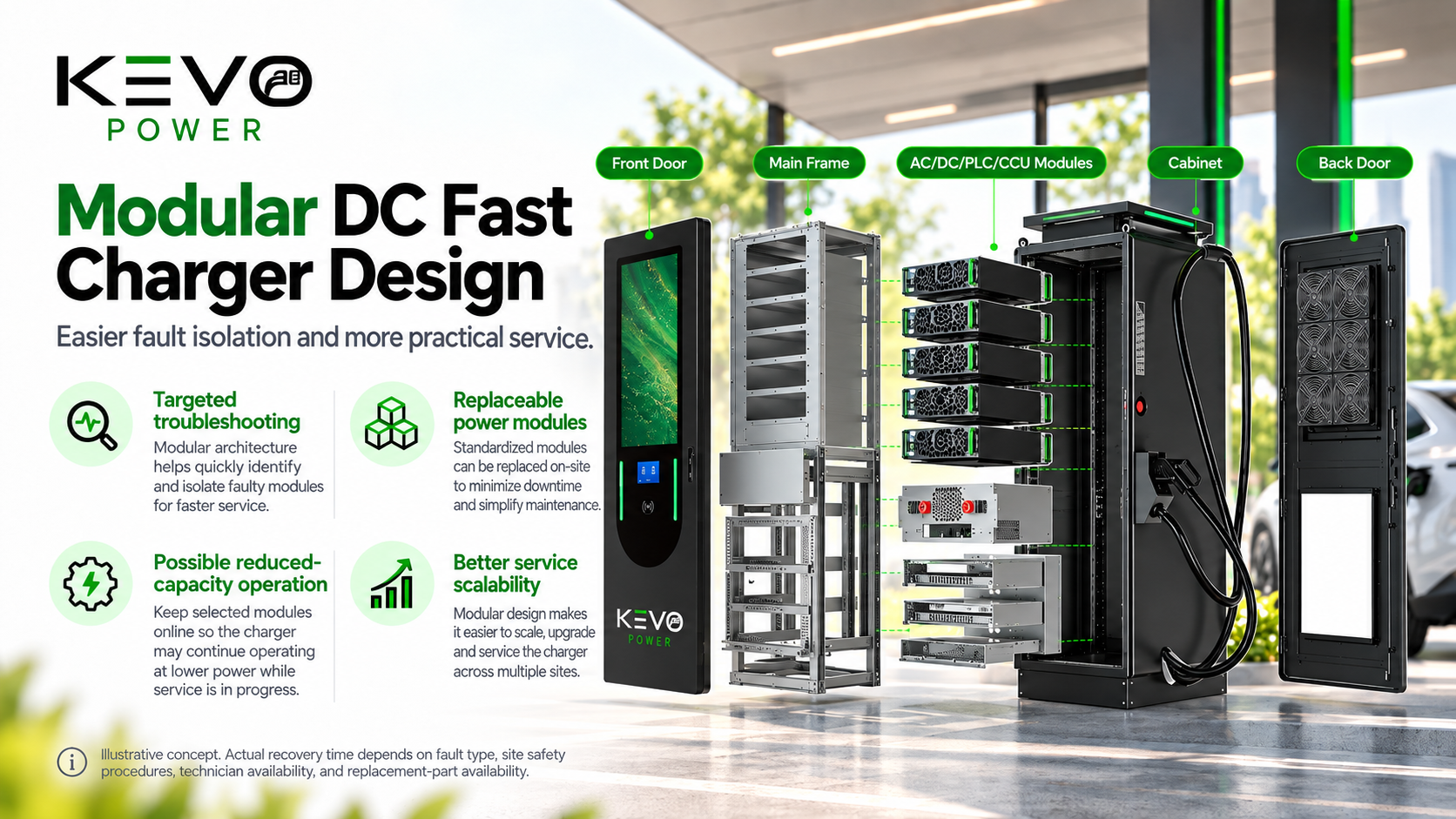
In a modular DC charging architecture, power is delivered through multiple replaceable power modules rather than depending on a single non-replaceable power-conversion unit. This approach can simplify diagnosis and targeted replacement when a power module develops a fault.
- More targeted troubleshooting: technicians can focus on the affected module rather than replacing a larger assembly.
- Simpler maintenance planning: replaceable modules can support a more practical spare-parts strategy.
- Potential for reduced-capacity operation: when the system and fault conditions permit, healthy modules may continue operating while the faulty module is removed.
- Better service scalability: standardized maintenance procedures can be useful for operators managing several charging sites.
Modularity does not mean that every type of fault can be repaired instantly or that a charger will always remain online. Actual recovery time depends on fault type, technician availability, site safety procedures, and replacement-part availability.
KEVO Power DC Series VI: A Modular Fast Charger Built for Commercial Operations
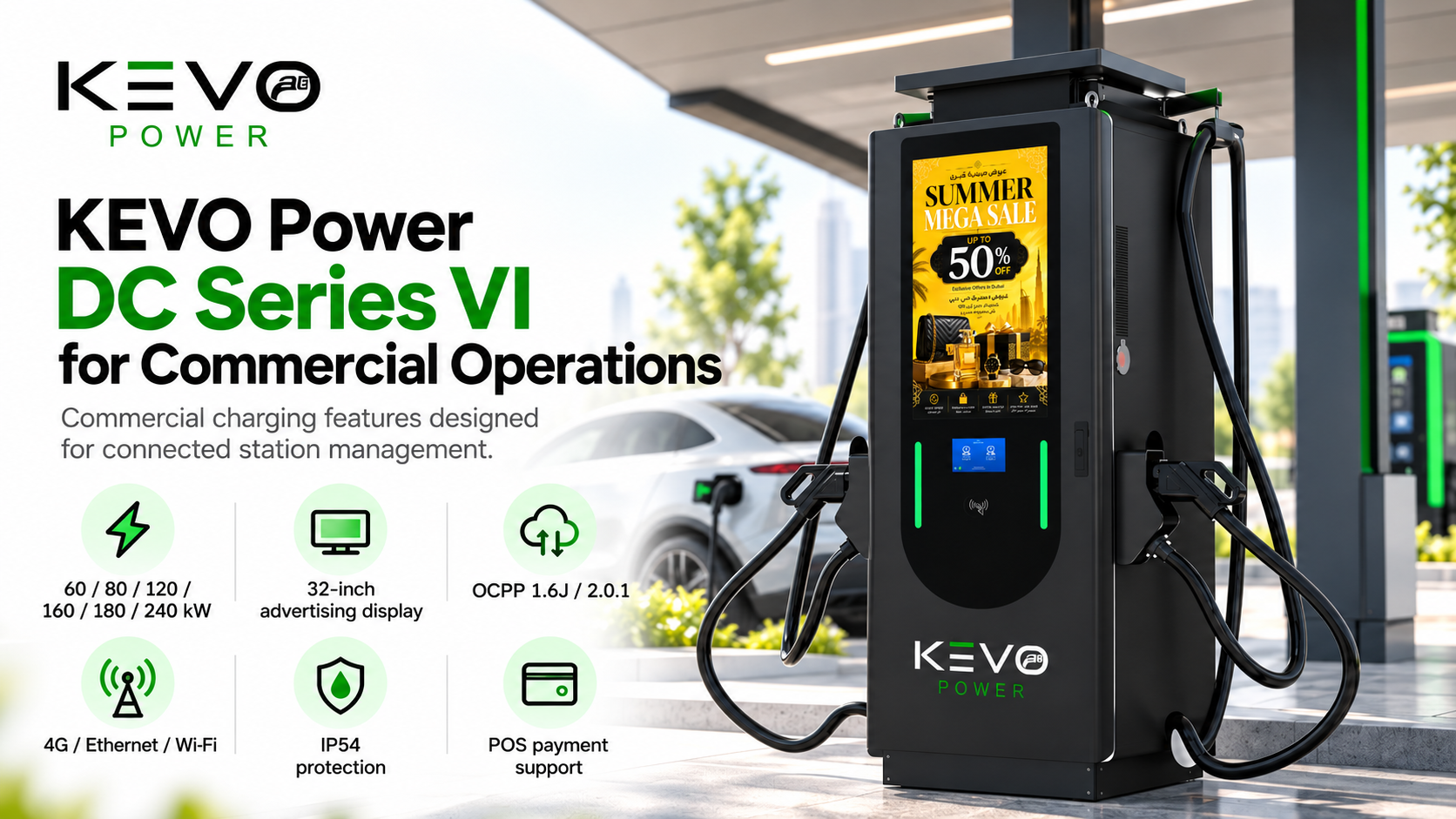
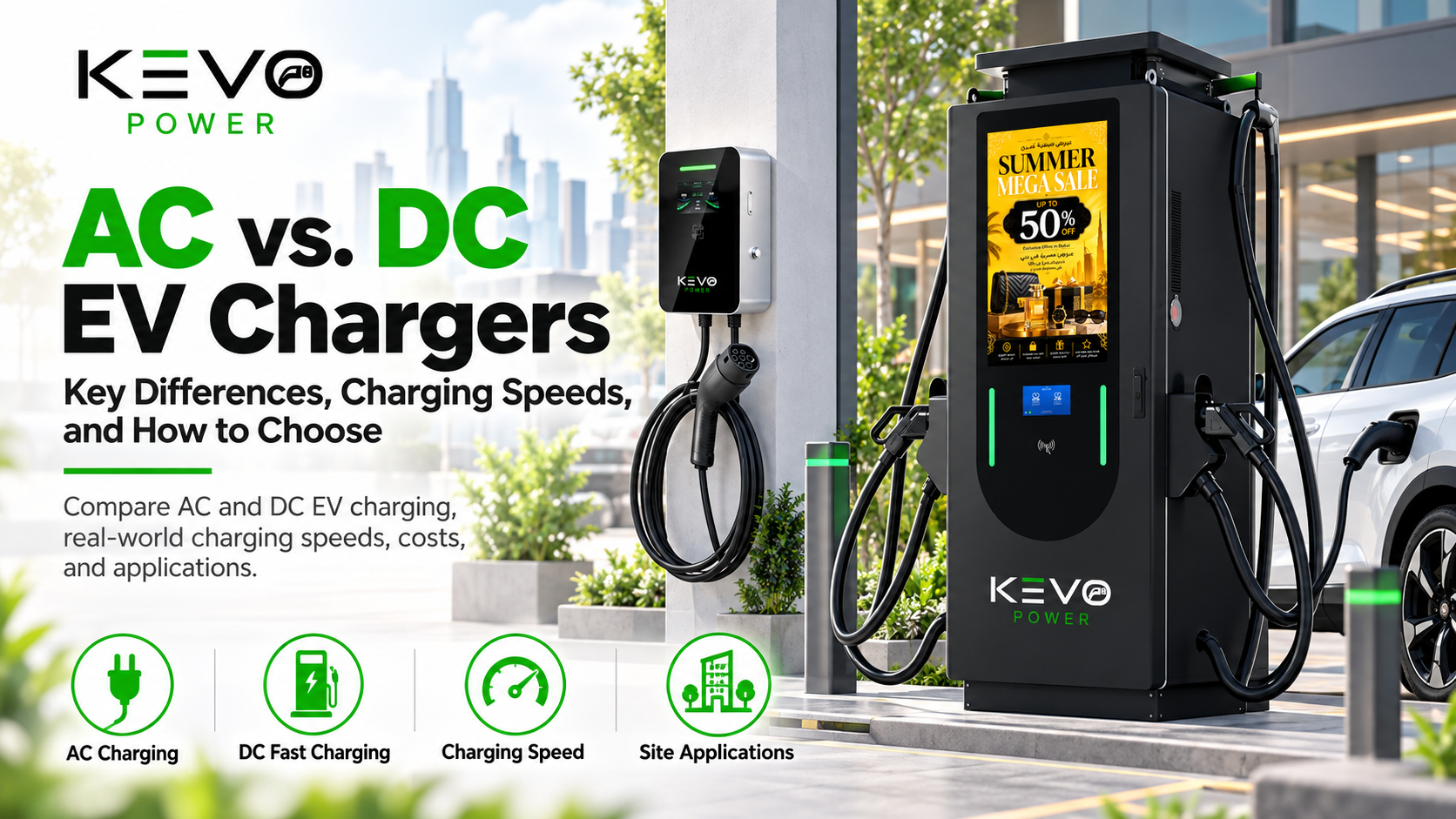
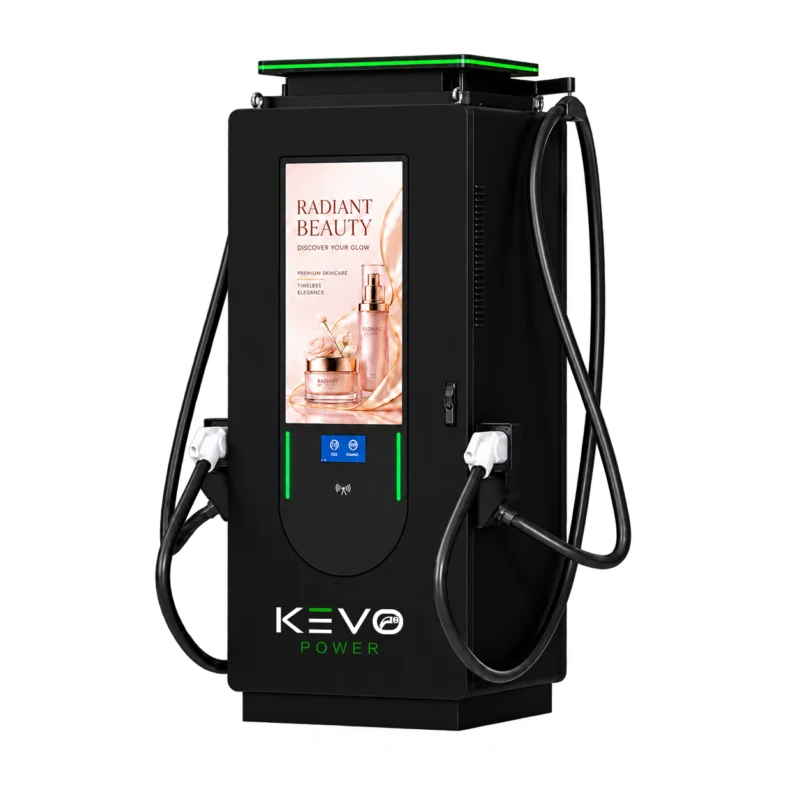
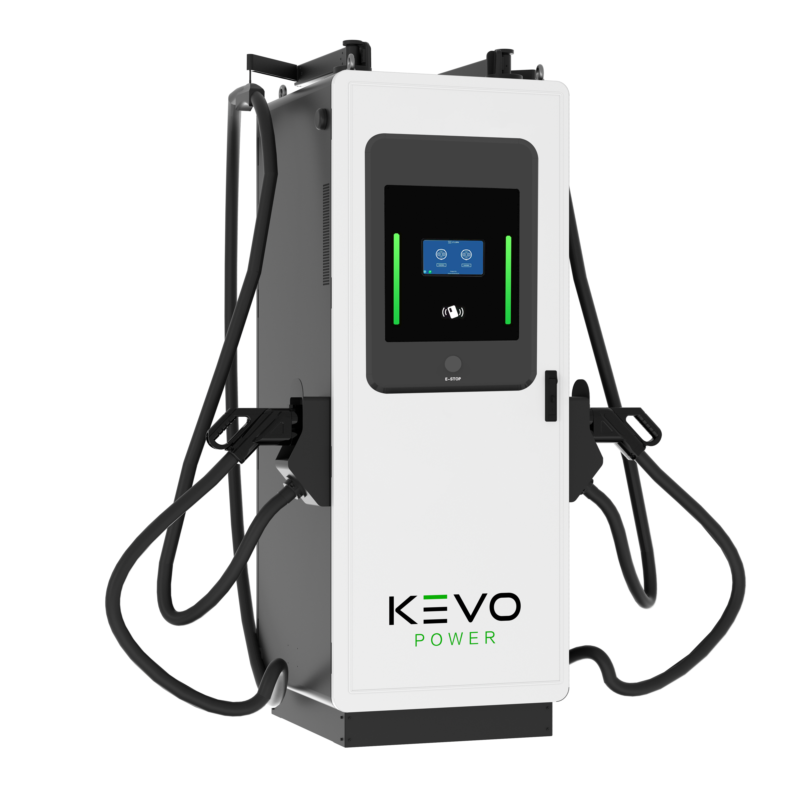
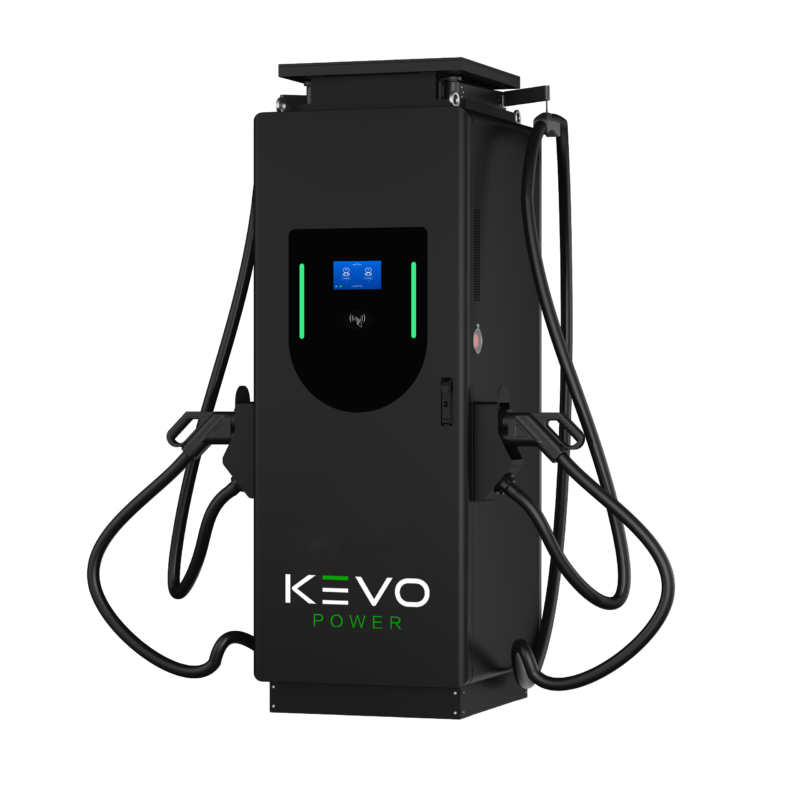
The KEVO Power DC Series VI combines modular power design with commercial-site features. Available rated-power options are 60 kW, 80 kW, 120 kW, 160 kW, 180 kW, and 240 kW, allowing project planners to match charging capacity to site demand and electrical infrastructure.
According to the product page, its modular design supports the isolation of a faulty power module. When appropriate, operators can replace that module or continue operating with the remaining modules at reduced capacity. This should not be interpreted as a guaranteed total repair time for every failure.
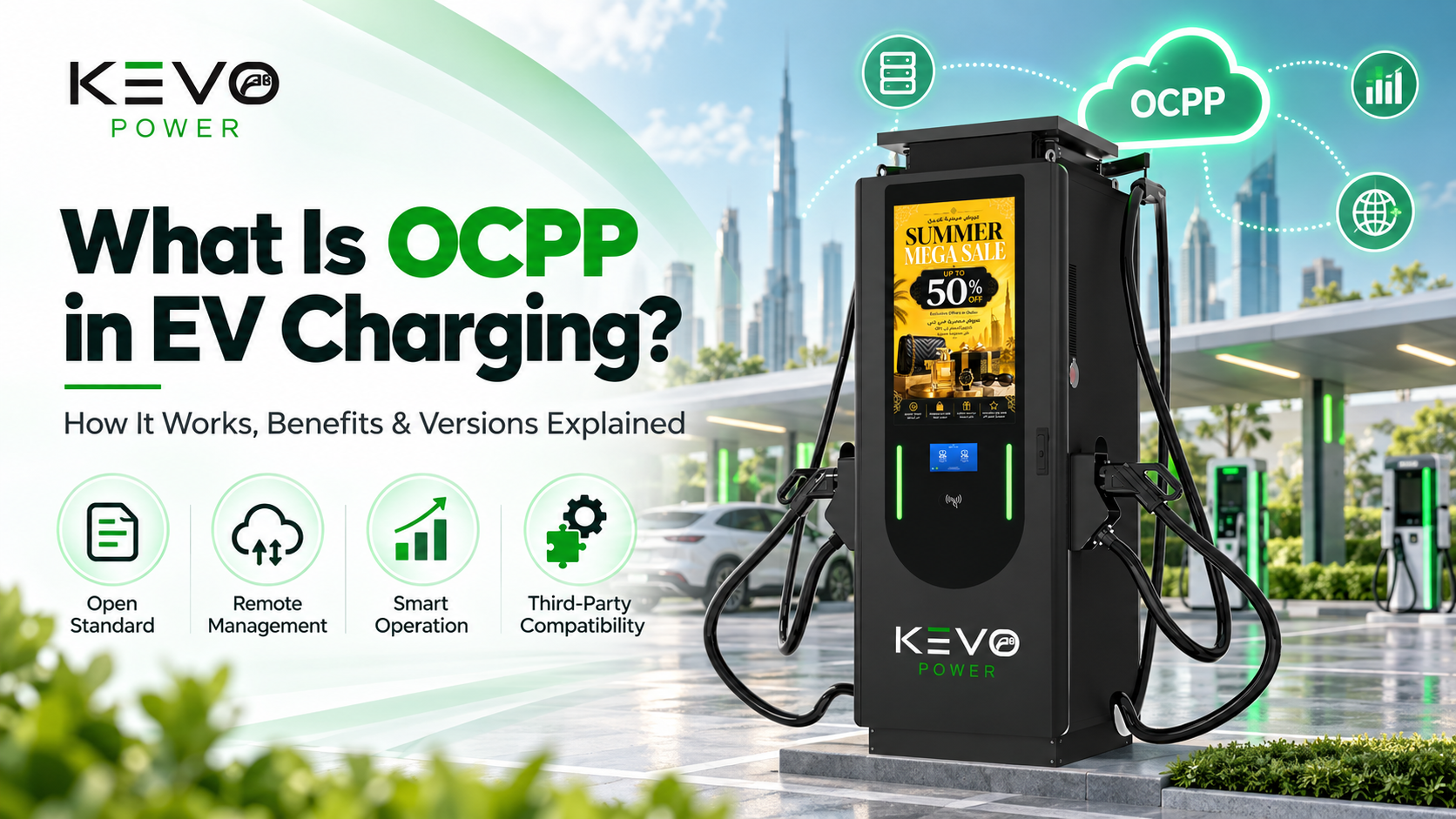
Other listed Series VI features include a 32-inch advertising display, OCPP 1.6J / 2.0.1, 4G / Ethernet / Wi-Fi connectivity, IP54 ingress protection, and POS payment support. Explore the KEVO Power DC Series VI 60–240 kW fast charger.
Smart Cable Management: Protecting Equipment and Improving Driver Convenience
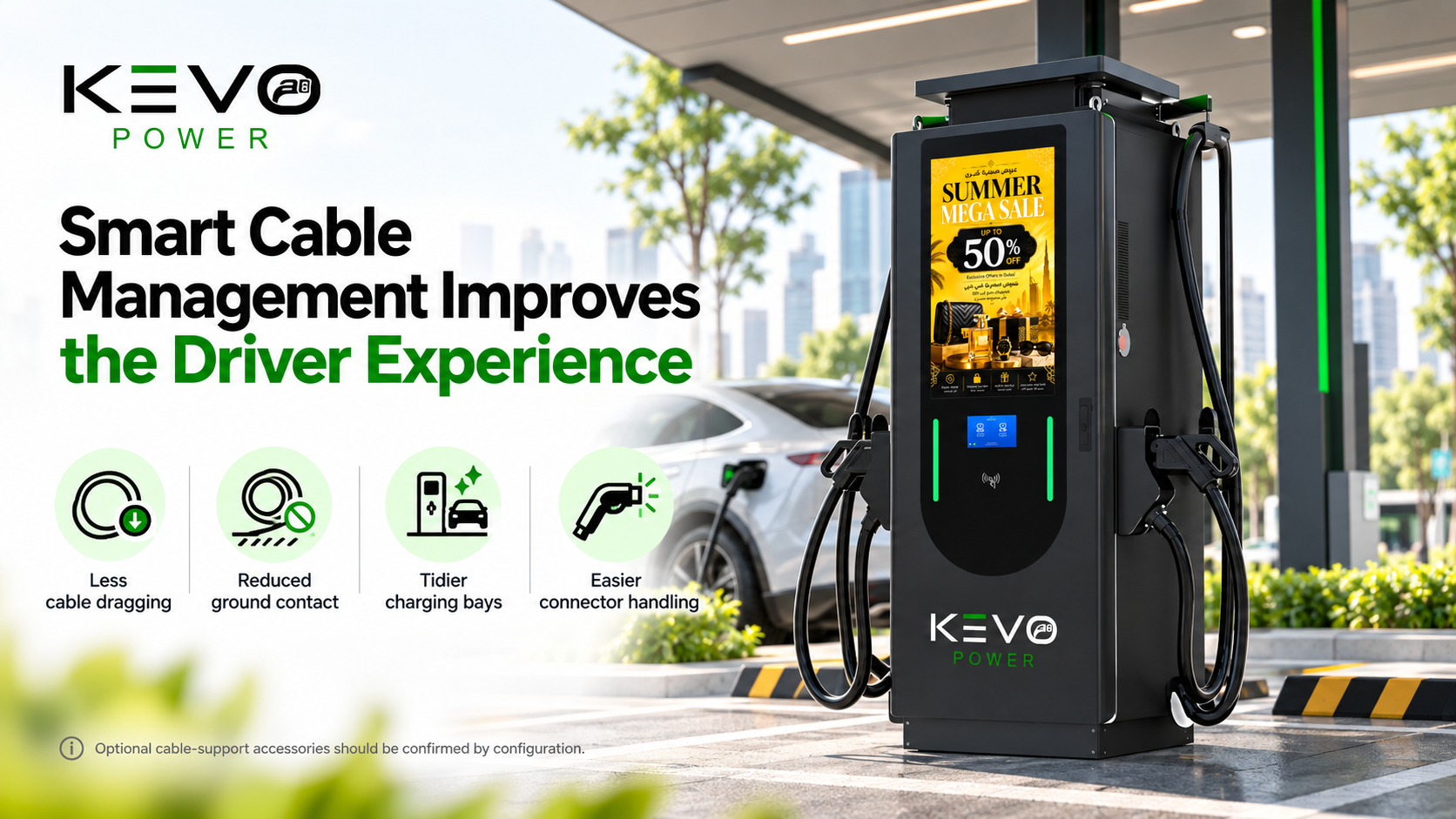
The charging cable is one of the components drivers handle most often. At busy public charging sites, cables that rest on the pavement can be exposed to dragging, impact, and accidental vehicle contact. Heavy connectors can also make charging less comfortable for some users.
A properly designed cable-support or power-assisted arm can help keep cables elevated, reduce ground contact, and make connector handling more manageable. The benefits are practical: less cable dragging, a tidier charging bay, and a more convenient experience for different drivers.
Cable management should be evaluated separately from the charger’s modular power design. A power-assisted arm is not stated as a standard feature of the DC Series VI product page; configuration and compatibility should be confirmed with KEVO Power before ordering.
Beyond Charging Revenue: The Role of a 32-Inch Advertising Screen
For high-traffic commercial locations, an integrated display may provide space for promotions, site information, or third-party advertising. The DC Series VI features a 32-inch advertising screen, creating an opportunity for operators to integrate visual communication into the charging experience.
Advertising income is not automatic. Results depend on foot traffic, audience, content management, local regulations, and commercial agreements. Nevertheless, a display-equipped charger can support a broader site-monetization strategy.
What to Check Before Purchasing a Commercial DC Fast Charger
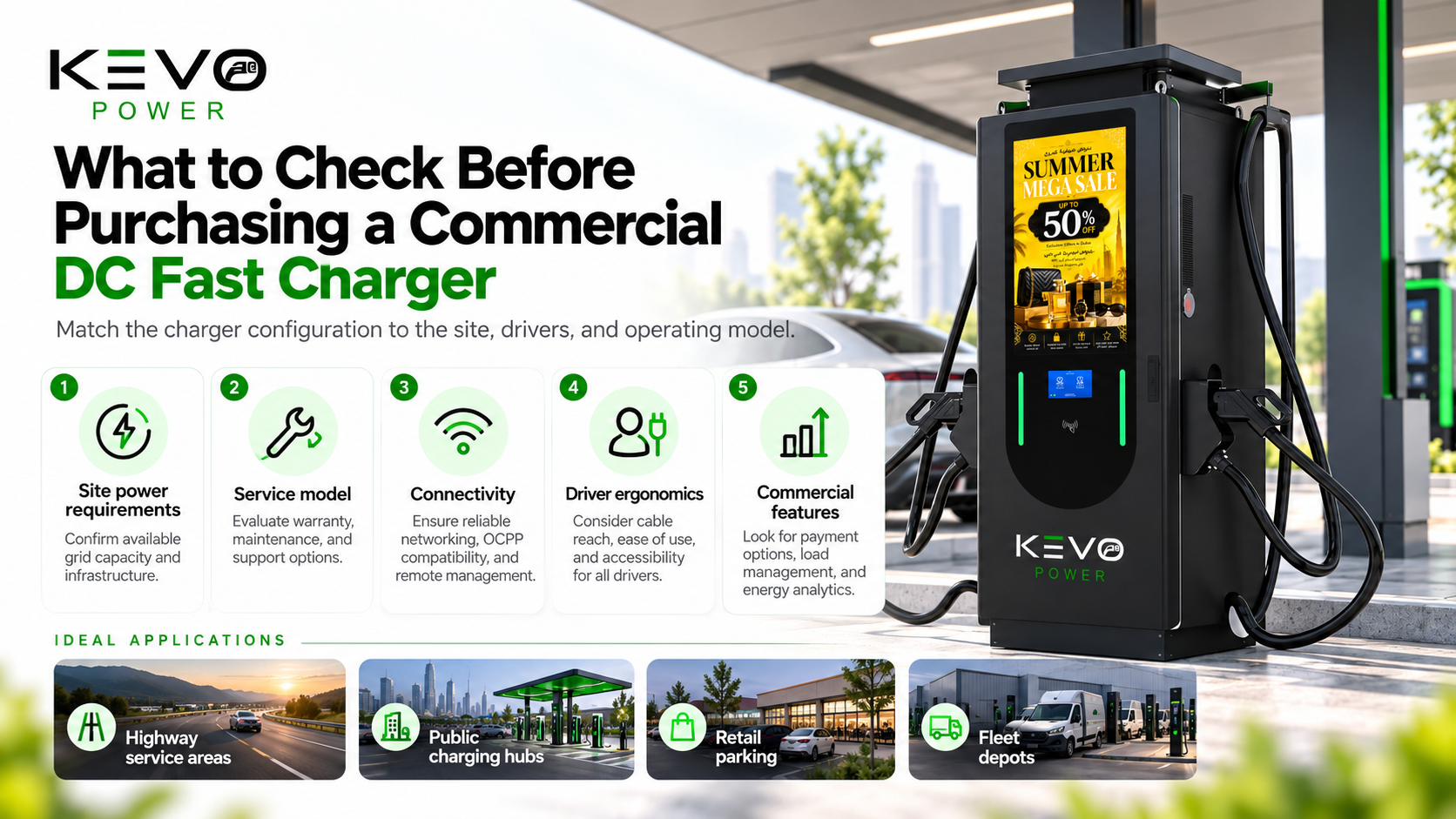
- Site power requirements: match charger output with grid capacity, expected vehicle demand, and installation budget.
- Service model: ask about fault diagnosis, module replacement instructions, training, and spare-parts availability.
- Connectivity: confirm compatibility between OCPP versions, the charging management system, and network coverage.
- Driver ergonomics: assess cable reach, connector weight, parking-bay layout, and optional cable-support systems.
- Commercial features: decide whether an advertising display and payment integration fit the site business model.
Where Modular DC Fast Chargers Make Sense
The right configuration depends on the project, but modular DC charging can be particularly relevant to highway service areas, commercial charging hubs, retail parking facilities, and fleet depots. These locations often place a high value on charger availability, clear servicing procedures, and efficient driver turnover.
Conclusion: Build for Availability, Serviceability, and Better User Experience
EV charger uptime depends on more than headline power. High charging power alone does not guarantee a successful charging business. Operators also need equipment that can be maintained efficiently, charging bays that are easy to use, and features that fit their operating model.
By pairing modular DC fast-charging architecture with thoughtful cable handling and commercial-site functionality, CPOs can make more informed long-term infrastructure choices. The KEVO Power DC Series VI provides a practical example of a modular 60–240 kW charging platform with a 32-inch display and connected-station capabilities.
Planning a new charging station or upgrading an existing network to improve EV charger uptime? Contact KEVO Power to discuss model selection, project configurations, and OEM/ODM cooperation, or email info@kevopower.com.