Does higher charger power mean faster charging? It is easy to assume that a 240 kW DC fast charger will always charge an electric vehicle twice as fast as a 120 kW unit. In real-world operation, the answer depends on the vehicle, battery and charging system.
The short answer: higher charger power can reduce charging time only when the vehicle, battery, cable, temperature and site power can all support it. The charger’s rated output is a ceiling, not a guarantee of continuous charging power.
For charging-station operators, fleet managers, distributors and project developers, understanding these limits helps avoid overspending on capacity that vehicles cannot use – or undersizing equipment for a future vehicle mix.
1. Does Higher Charger Power Mean Faster Charging?
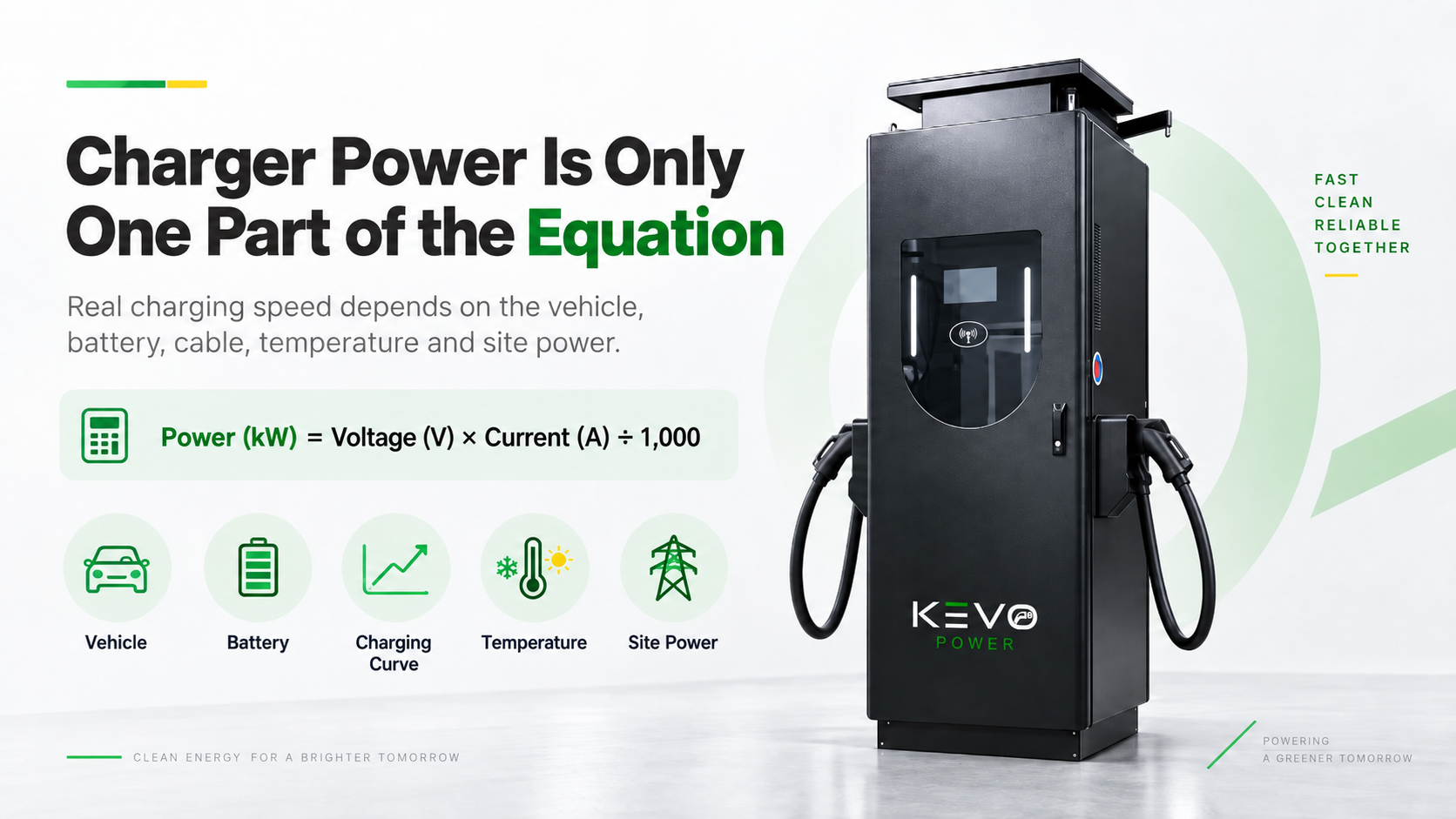
DC charging power is approximately the product of voltage and current:
Power (kW) = Voltage (V) × Current (A) ÷ 1,000
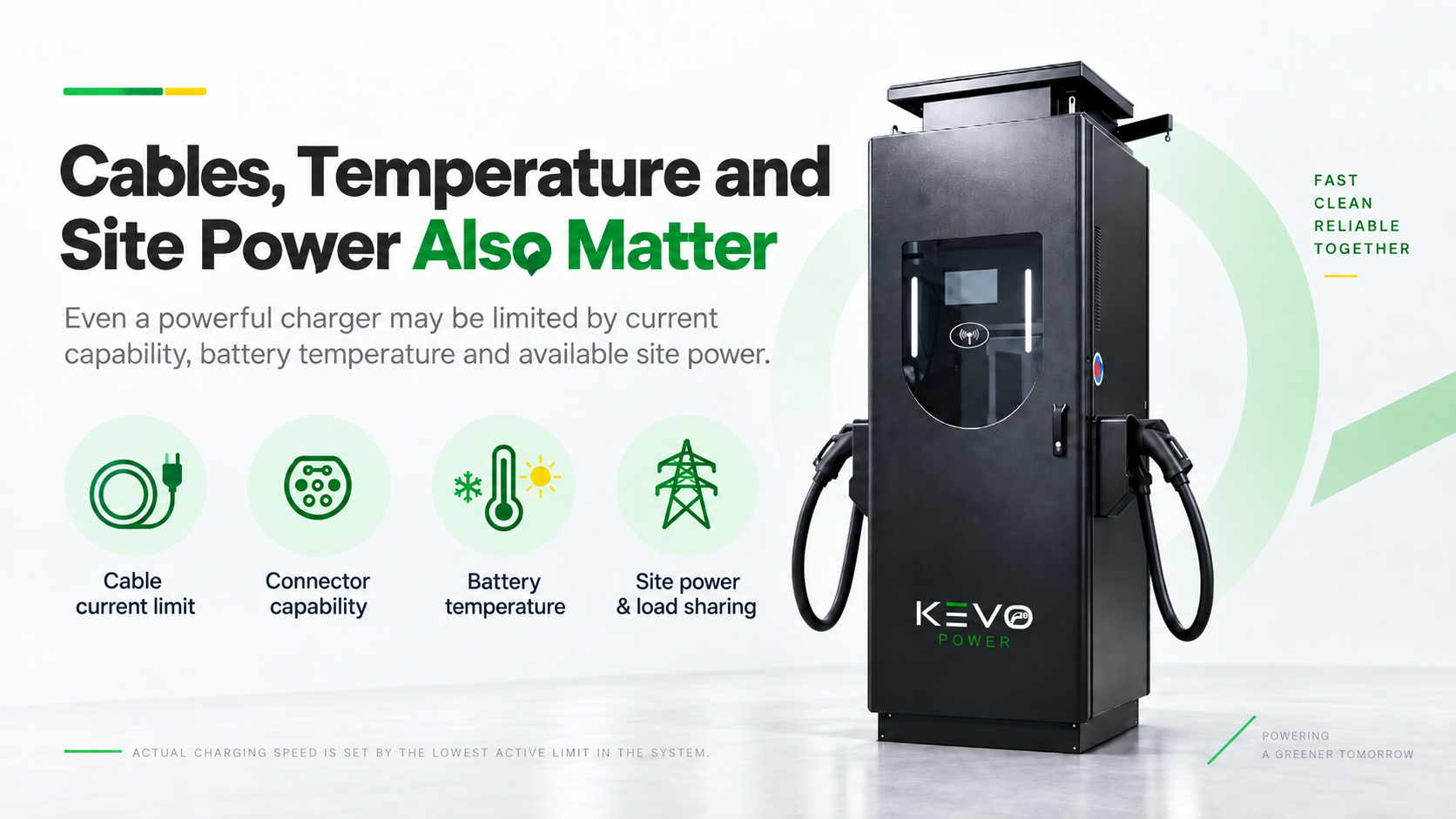
During a charging session, the vehicle and charger continuously communicate. The battery management system (BMS) requests a voltage and current level, and the charger responds within its own hardware and site limits. Actual charging power is therefore governed by the lowest active limit in the system.
- The charger’s maximum rated output
- The vehicle’s maximum DC charging acceptance rate
- Battery state of charge and the vehicle’s charging curve
- Battery temperature and thermal-management conditions
- Connector and charging-cable current capability
- Available site power and any dynamic load or power sharing
2. The Vehicle Decides How Much Power It Will Accept
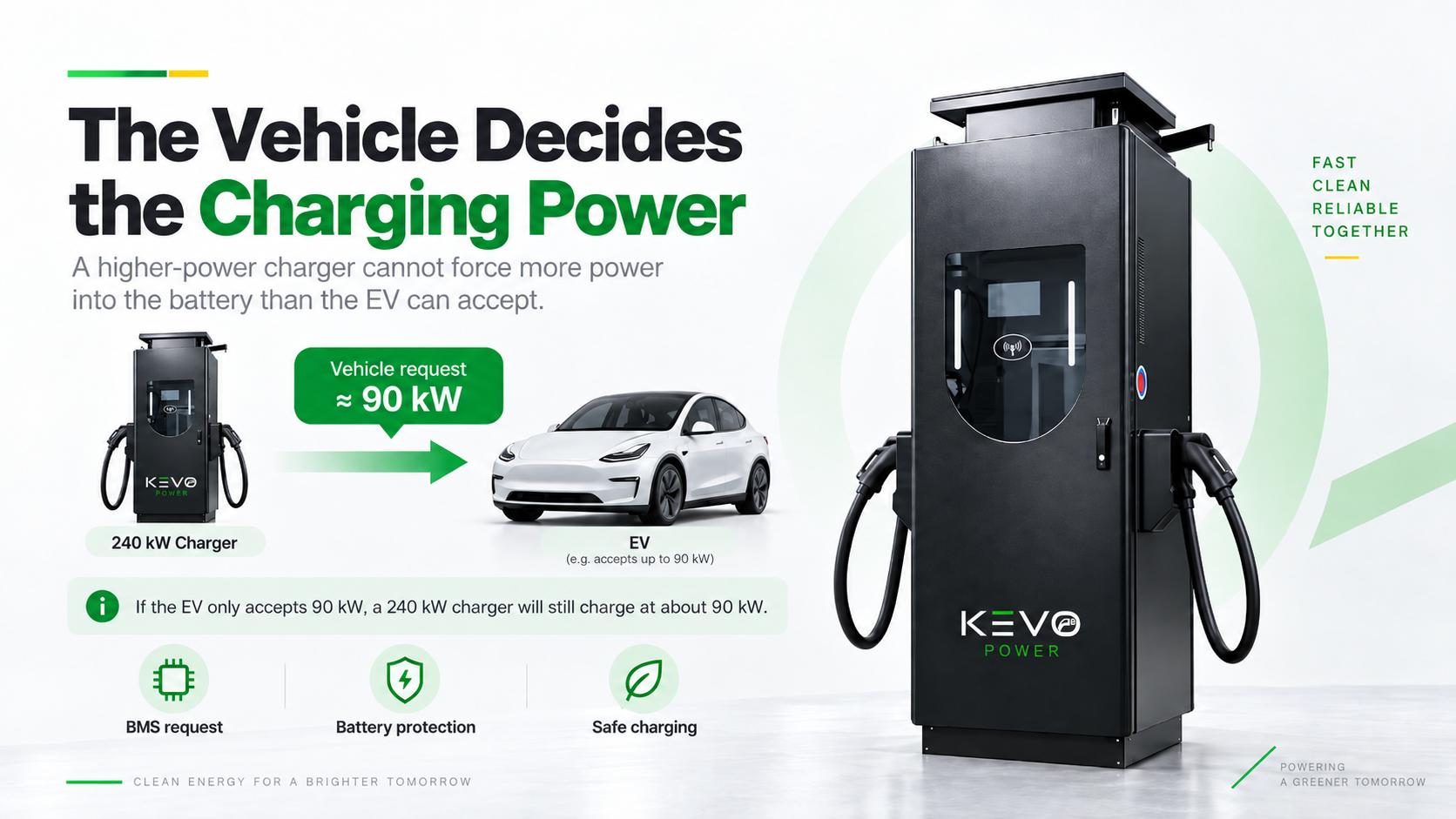
Every EV has a maximum DC charging acceptance rate, but that peak is not maintained throughout the entire session. The BMS adjusts charging power to protect battery life, manage temperature and keep individual cells within safe limits.
If a vehicle can accept only 90 kW at a particular moment, connecting it to a 240 kW charger will not force 240 kW into the battery. The charger may have spare capacity, but the vehicle will continue to request about 90 kW or less.
3. Charging Curves Matter More Than the Peak Number
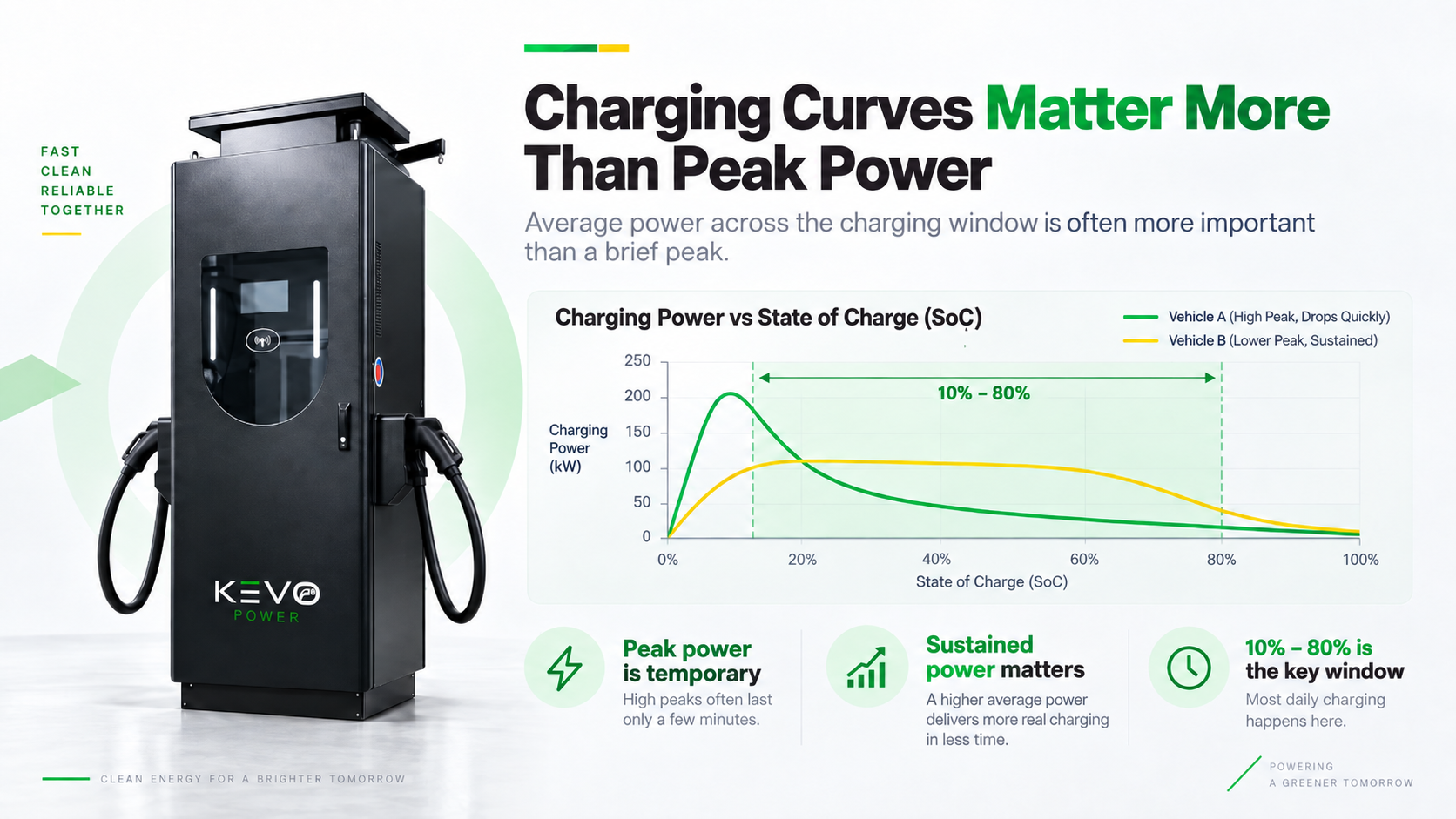
A vehicle may briefly reach its advertised peak charging power at a low or moderate state of charge, then taper as the battery fills. This pattern is known as the charging curve. Charging usually slows substantially near a high state of charge, which is why the time from 80% to 100% can be disproportionately long.
For site planning, average power across the intended charging window is usually more useful than a single peak figure. A vehicle that holds 150 kW for longer can complete a 10%-to-80% session faster than another vehicle that briefly peaks at 200 kW and then tapers sharply.
4. 400V vs 800V EV Charging: Why Voltage Architecture Matters
Higher-voltage vehicle platforms can deliver more power at the same current. This is one reason many newer long-range and high-performance EVs use an 800V-class architecture. However, the vehicle’s voltage platform alone does not guarantee a faster session; the battery, BMS, cable, charger and charging curve must still support the required power.
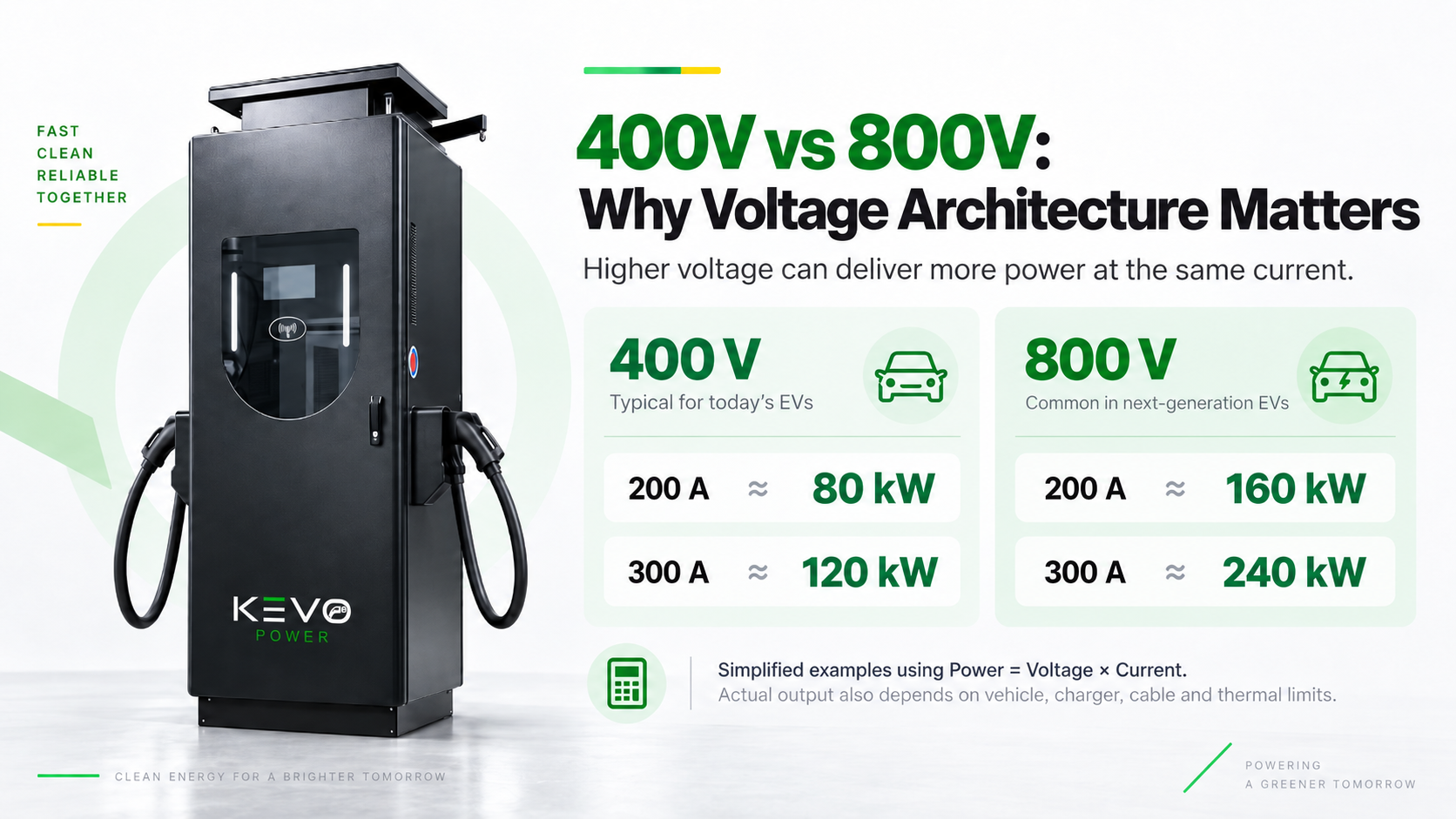
| Illustrative pack voltage | At 200 A | At 300 A | What this shows |
|---|---|---|---|
| 400 V | Approx. 80 kW | Approx. 120 kW | More current is required to reach higher power. |
| 800 V | Approx. 160 kW | Approx. 240 kW | Higher voltage can deliver more power at the same current. |
These are simplified examples using Power = Voltage × Current. Actual pack voltage changes during charging, and real output remains subject to vehicle, charger, cable and thermal limits.
5. Cable and Connector Current Can Become the Bottleneck
A charger’s power electronics may be capable of high output, but the connector and cable must safely carry the required current. If current capability is lower than the vehicle and charger demand, the session will be limited accordingly. Cable temperature monitoring and thermal protection may also reduce current when necessary.
This is especially important when specifying high-power charging for 400V vehicles, because reaching a given power level requires more current than on an 800V-class vehicle. Project buyers should compare the charger’s maximum output current per connector – not only the headline kilowatt rating.
6. Battery Temperature and State of Charge Change the Result
A cold or very hot battery may accept less power until its temperature enters the preferred operating range. Some EVs precondition the battery before arriving at a fast charger, but the effect depends on the vehicle and route planning. High state of charge also causes the BMS to taper power, regardless of the charger’s rated capacity.
This explains why the same vehicle and charger can produce different results on different days or at different points in a journey.
7. Dual-Connector Chargers May Use Dynamic Power Sharing
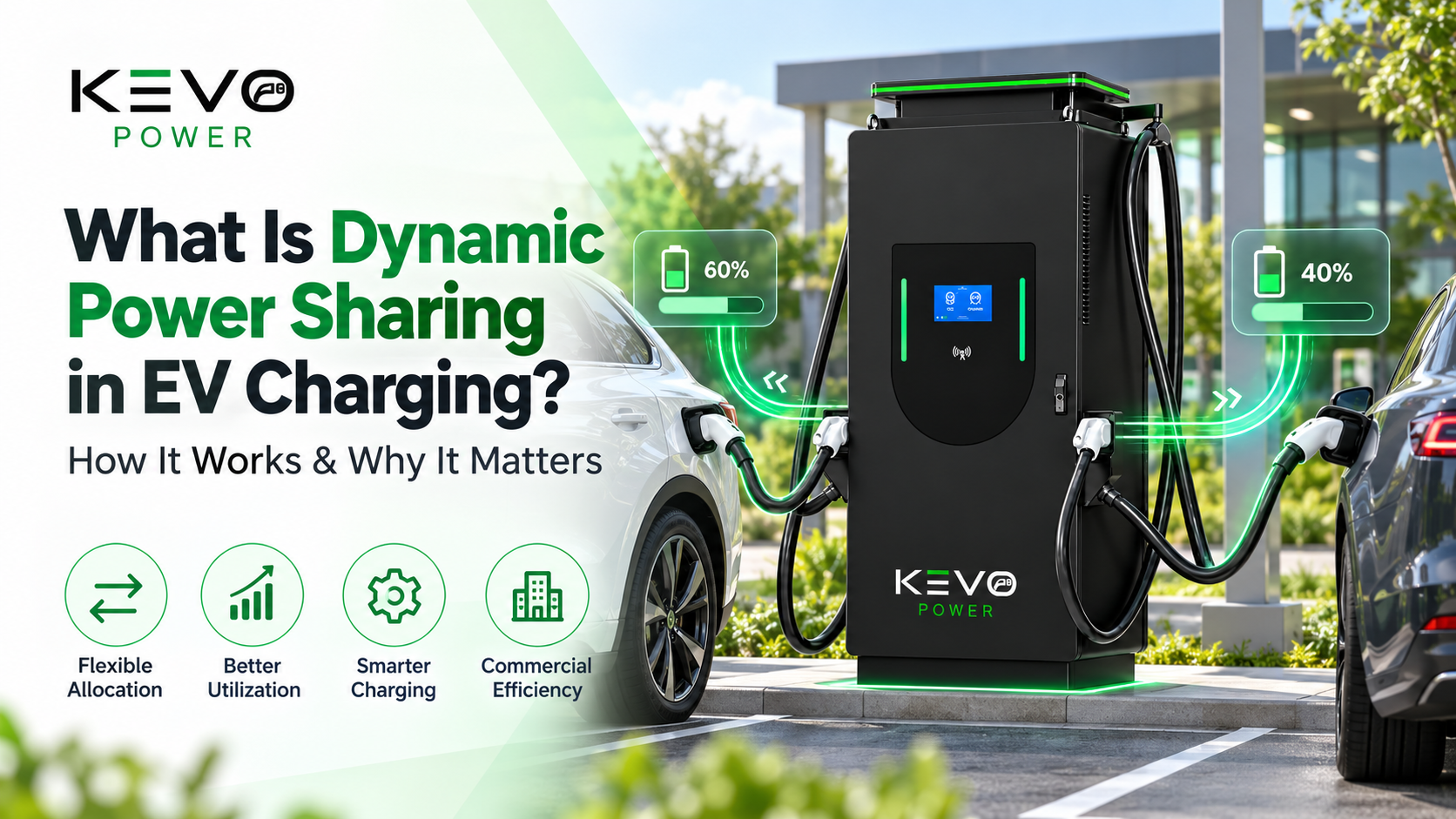
On a dual-connector DC charger, the total cabinet power may be allocated between two vehicles. The distribution can be equal, priority-based or dynamically adjusted according to each vehicle’s request, depending on the charger’s configuration.
For example, a 240 kW cabinet does not necessarily deliver 240 kW to both connectors at the same time. Buyers should confirm total cabinet output, maximum power per connector, current limits and the power-allocation logic before finalizing a project specification.
8. How to Choose the Right DC Charger Power
The best charger is the one that fits the vehicle mix, dwell time, site capacity and business model. Before choosing 60 kW, 120 kW, 180 kW or 240 kW equipment, evaluate:
- Current and expected vehicle voltage platforms
- Typical battery capacity and maximum DC acceptance rate
- Required 10%-to-80% turnaround time
- Maximum current per connector and cable-handling requirements
- Single-vehicle versus simultaneous dual-vehicle charging
- Grid connection, transformer capacity and load-management strategy
- Connector standards, backend integration and OCPP requirements
- Climate, installation environment, maintenance access and local compliance
A mixed public-charging or fleet site may benefit from modular power, dynamic allocation and broad output-voltage coverage. A location serving predictable 400V fleet vehicles with long dwell times may achieve a better return from moderate power and more charging points instead of the highest possible rating.
Where Kevo Power Fits
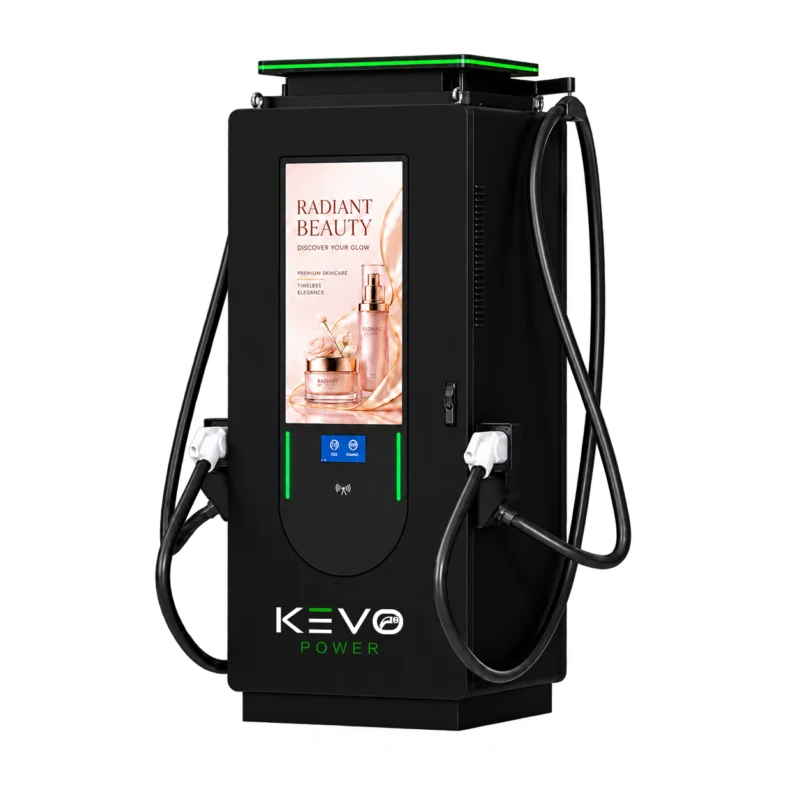
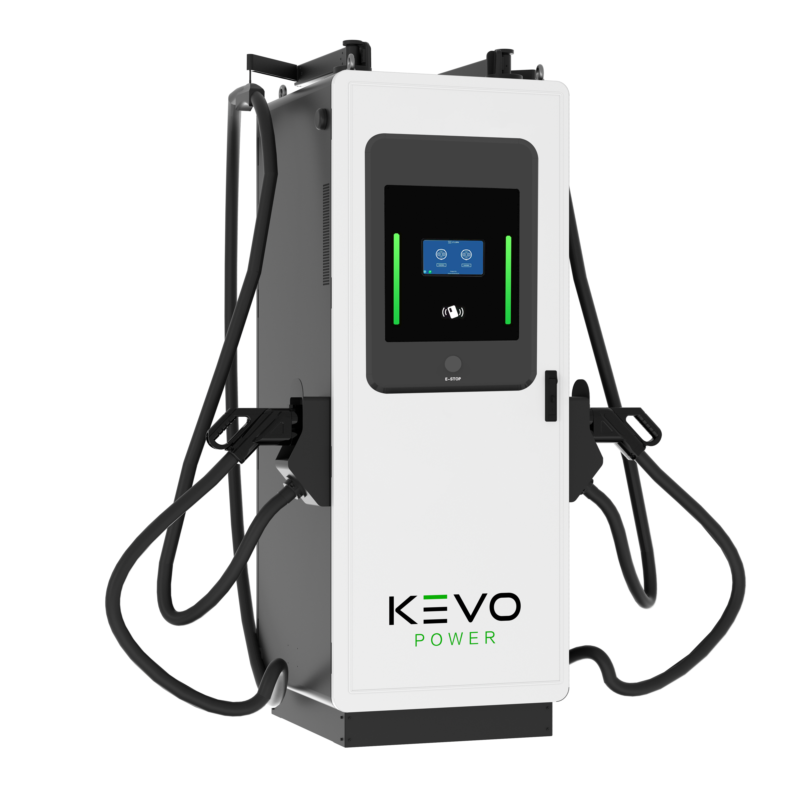
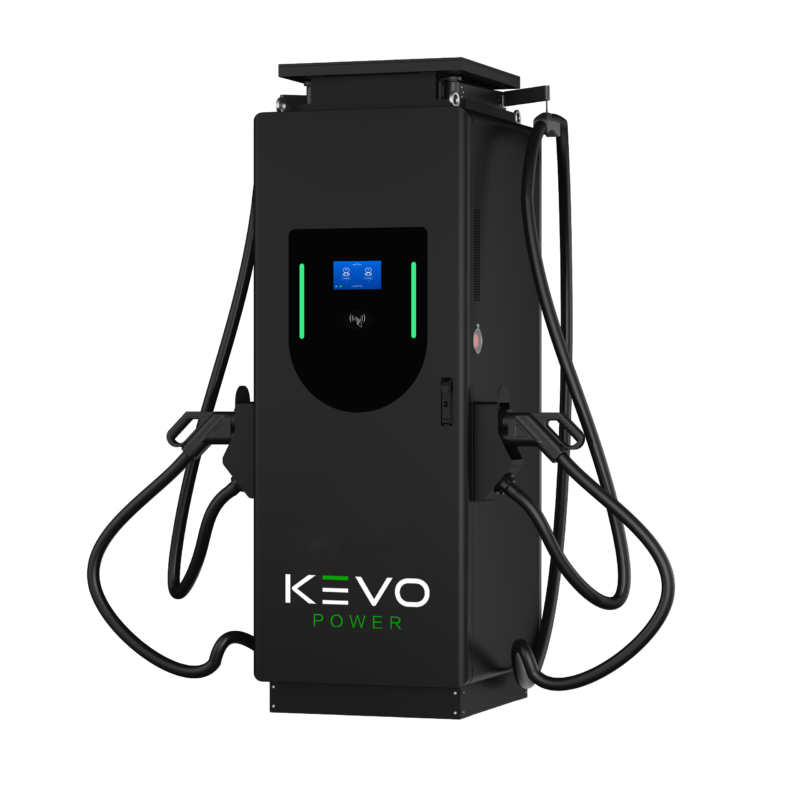
Kevo Power offers modular DC fast charger configurations for commercial charging projects. The DC Series VII covers 60 kW to 240 kW options and includes a power-assisted arm designed to improve heavy cable handling. Model specifications, including voltage range, maximum current, connector configuration, communication protocol and environmental rating, should always be confirmed against the latest product datasheet for the selected configuration.
For a closer look at heavy-cable usability, read our guide to power-assisted arms for DC fast chargers.
Explore the full DC charger product range, review commercial charging solutions, or download the latest catalogue and specification sheets before preparing a project shortlist.
Conclusion
Higher DC charger power can mean faster charging, but only when the vehicle and the rest of the charging system can use that power. Real-world speed is controlled by the vehicle’s acceptance rate, charging curve, voltage platform, cable current, battery temperature, state of charge and available site power.
For B2B buyers, the right question is not simply, “What is the highest kilowatt rating?” A better question is, “Which charger configuration delivers the required turnaround time for our actual vehicle mix, site capacity and operating model?”
Planning a DC fast-charging project?
Share your vehicle types, required charging time, connector standard and site power conditions with our team. Contact Kevo Power for a configuration recommendation and quotation.
Frequently Asked Questions About DC Fast Charging Power
Does a 240 kW charger always charge twice as fast as a 120 kW charger?
No. It can be faster only when the vehicle can accept more than 120 kW for a meaningful part of the session and the site, cable and thermal conditions support that output.
Can a 400V EV use a 240 kW DC charger?
It may be able to connect and charge, but actual power depends on the vehicle’s voltage and current limits. Many 400V vehicles cannot use the charger’s full 240 kW rating.
Are 800V EVs always faster to charge?
Not always. An 800V-class architecture can deliver high power at lower current, but charging speed still depends on battery capability, temperature, state of charge and the charging curve.
Why does charging slow down near 80%?
The BMS usually reduces charging power as the battery fills to control heat and cell voltage. This tapering is normal and helps protect the battery.
What should buyers check on a dual-gun DC charger?
Confirm total cabinet power, maximum output per connector, maximum current per connector, simultaneous charging behavior and whether power is shared dynamically.
Which charger power is best for a commercial site?
The answer depends on vehicle mix, dwell time, grid capacity, utilization targets and expansion plans. A site assessment is more reliable than selecting equipment by peak kilowatts alone.