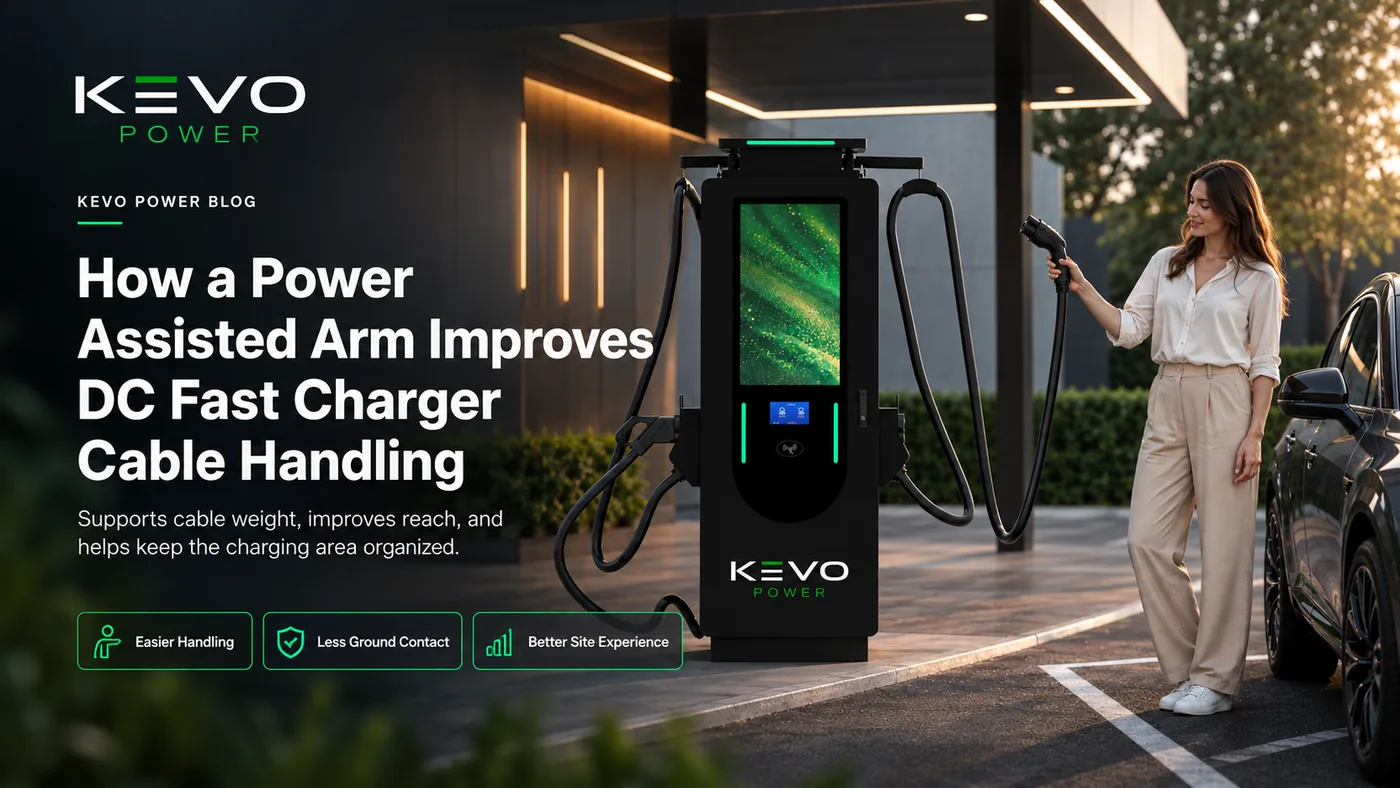
High-power DC fast chargers use thick, durable charging cables to carry substantial current. That cable construction is necessary, but it can make the connector harder to move across a charging bay. A power assisted arm for DC fast chargers supports part of the cable weight, improves reach and helps keep the cable off the ground. For commercial charging operators, better cable management can improve the user experience while reducing avoidable wear around the charging site.
Power Assisted Arm for DC Fast Chargers: How It Works
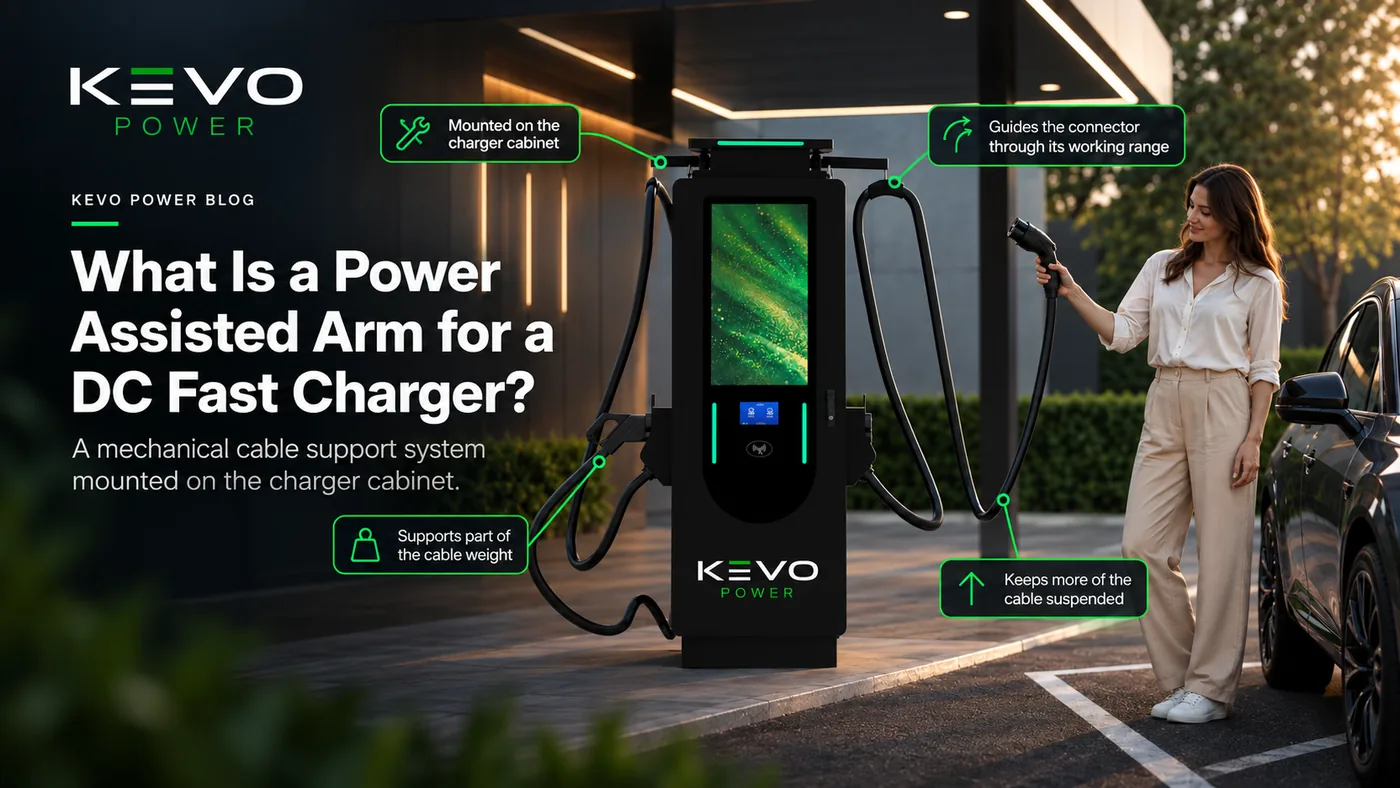
A power assisted arm is a mechanical cable support system mounted on the charger cabinet. As the driver moves the charging connector toward the vehicle inlet, the arm guides and supports the cable through its working range. Instead of leaving the driver to lift and drag the full cable weight, the system keeps more of the cable suspended and reduces pulling resistance.
This design is especially relevant to commercial DC fast charging stations, where charging cables are handled repeatedly throughout the day. It does not change the charging power or communication process. Its purpose is to make the physical connection easier to manage and to organize the cable between charging sessions.
Why High Power Charging Cables Are Difficult to Handle
DC fast charger cables contain heavy conductors, insulation and protective layers. Higher-power equipment therefore places greater demands on cable routing and connector handling than a typical AC charger. When a cable lies on the pavement, drivers may need to lift, pull and reposition it before the connector reaches the vehicle. Cable weight can also make tight turns and awkward parking positions more difficult.
A well-designed EV charger cable support arm addresses this practical issue without requiring the operator to change the charging workflow. Drivers still remove the connector, plug it into the vehicle and start the session in the normal way, while the arm provides mechanical support.
Benefits of Assisted DC Fast Charger Cable Management

Easier Connector Handling
By supporting part of the cable weight, the arm can make the charging connector easier to guide toward different vehicle inlet positions. This is useful at public charging sites that serve a wide range of passenger vehicles, vans and fleet vehicles. A smoother connection process can also reduce the time drivers spend repositioning a heavy cable before charging begins.
Less Cable Contact With the Ground
Cables that repeatedly drag across concrete or asphalt are exposed to abrasion, dirt and unnecessary twisting. Keeping more of the cable suspended helps limit routine ground contact. Actual cable life depends on usage, installation, maintenance and operating conditions, but reducing drag removes one common source of mechanical wear.
A Tidier Charging Bay
Supported cable routing can help keep the charging area more orderly between sessions. This is valuable at busy sites where connectors must be easy to locate and return. Operators should still plan the bay layout, wheel stops, bollards and parking position carefully so that the cable can reach the vehicle without excessive tension.
How Cable Management Affects Charging Station Operations
Charging power is only one part of a commercial EV charging station. Operators also manage connector condition, cable inspection, cleaning, service access and customer complaints. A cable support arm can simplify these daily tasks by helping the connector return to a consistent position and by reducing avoidable cable contact with the pavement.
The operational benefit depends on traffic volume and site conditions. At a low-use private location, the difference may be modest. At highway charging hubs, public car parks, shopping centers and fleet depots, repeated handling makes cable management more important because small usability issues occur many times each day.
Sites That Can Benefit Most

- Highway service areas and public fast charging hubs with frequent daily sessions
- Shopping centers and public car parks serving vehicles with different inlet positions
- Fleet depots where drivers connect and disconnect chargers on a regular schedule
- Commercial charging networks that want consistent cable placement across multiple sites
What to Check When Sourcing a Charger With a Support Arm
The arm should be evaluated as part of the complete charger rather than as an isolated accessory. Before procurement, confirm the cable reach, connector type, parking layout and movement range. The connector should reach the intended vehicles without pulling the cable tight or allowing excess cable to rest in a traffic path.
Buyers should also review charger output options, power allocation, communication protocols, environmental protection, working temperature and service access. For a multi-site rollout, ask the supplier how the arm, cable and connector can be inspected and replaced, and whether installation drawings are available for civil and electrical planning.
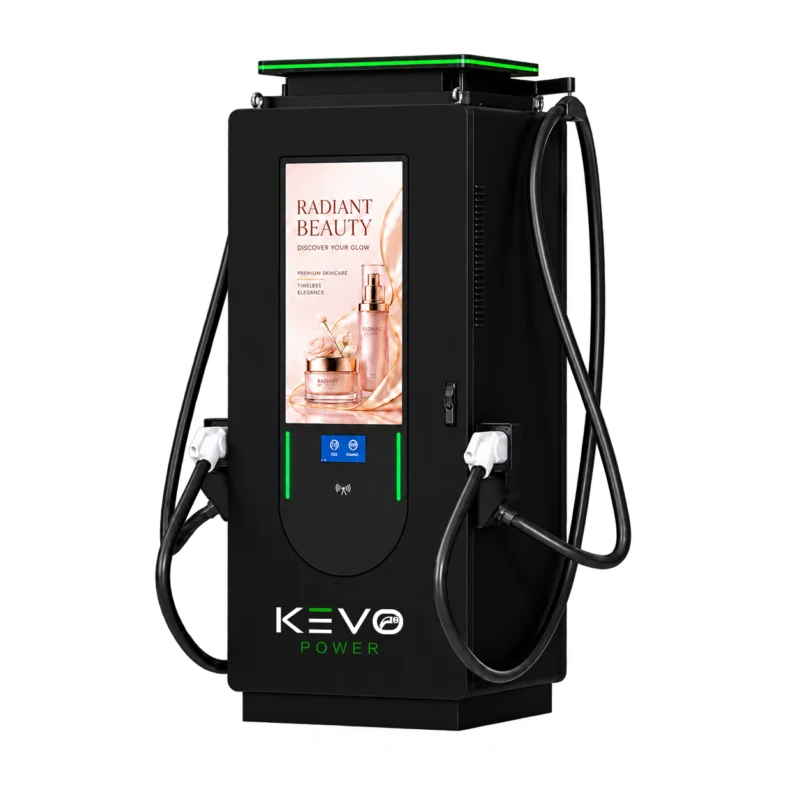
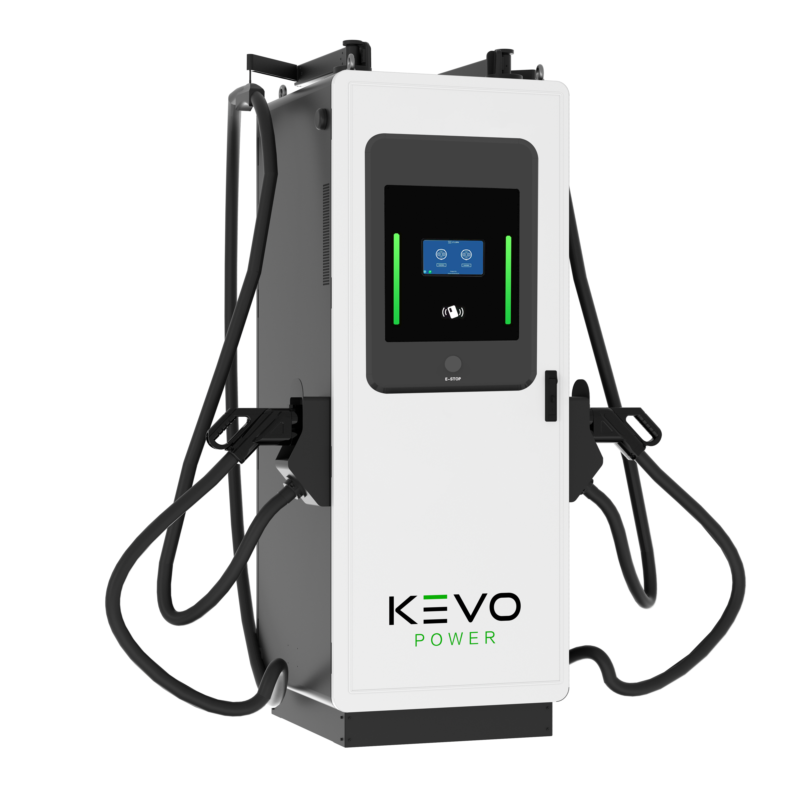
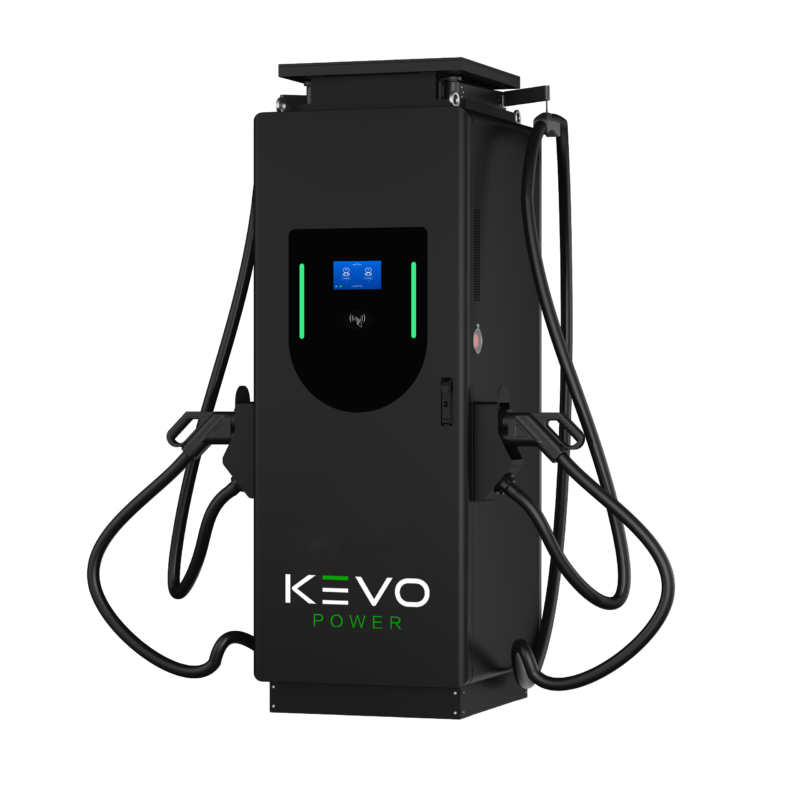
KEVO Power DC Series VII With Power Assisted Arm
The KEVO Power DC Series VII integrates a power assisted arm with a modular DC fast charger platform. Available output configurations range from 60 kW to 240 kW, allowing operators to match the charger to the site’s electrical capacity, vehicle mix and expected utilization.
The assisted arm is intended to make heavy cable handling easier and keep the charging area better organized. For project planning, model selection should be based on the required output, connector standard, communication needs, site layout and local installation requirements.
Charger size alone does not determine session time. See how DC charger power, vehicle limits and charging curves affect real charging speed when selecting the right output for a project.
Plan the Cable Path Before Finalizing the Charger
Cable management should be considered during the site design stage, not after equipment delivery. The charger position, parking orientation and vehicle inlet location all affect whether the arm can work through its intended range. A coordinated layout helps drivers reach the connector comfortably and helps the operator keep cables away from vehicle paths.
If you are planning a new charging hub or upgrading an existing site, review KEVO Power’s commercial charging solutions or contact our EV charging team to discuss output requirements, connector options and site layout. Include the expected vehicle types, daily charging volume and available electrical capacity so the recommended configuration can be matched to the project.