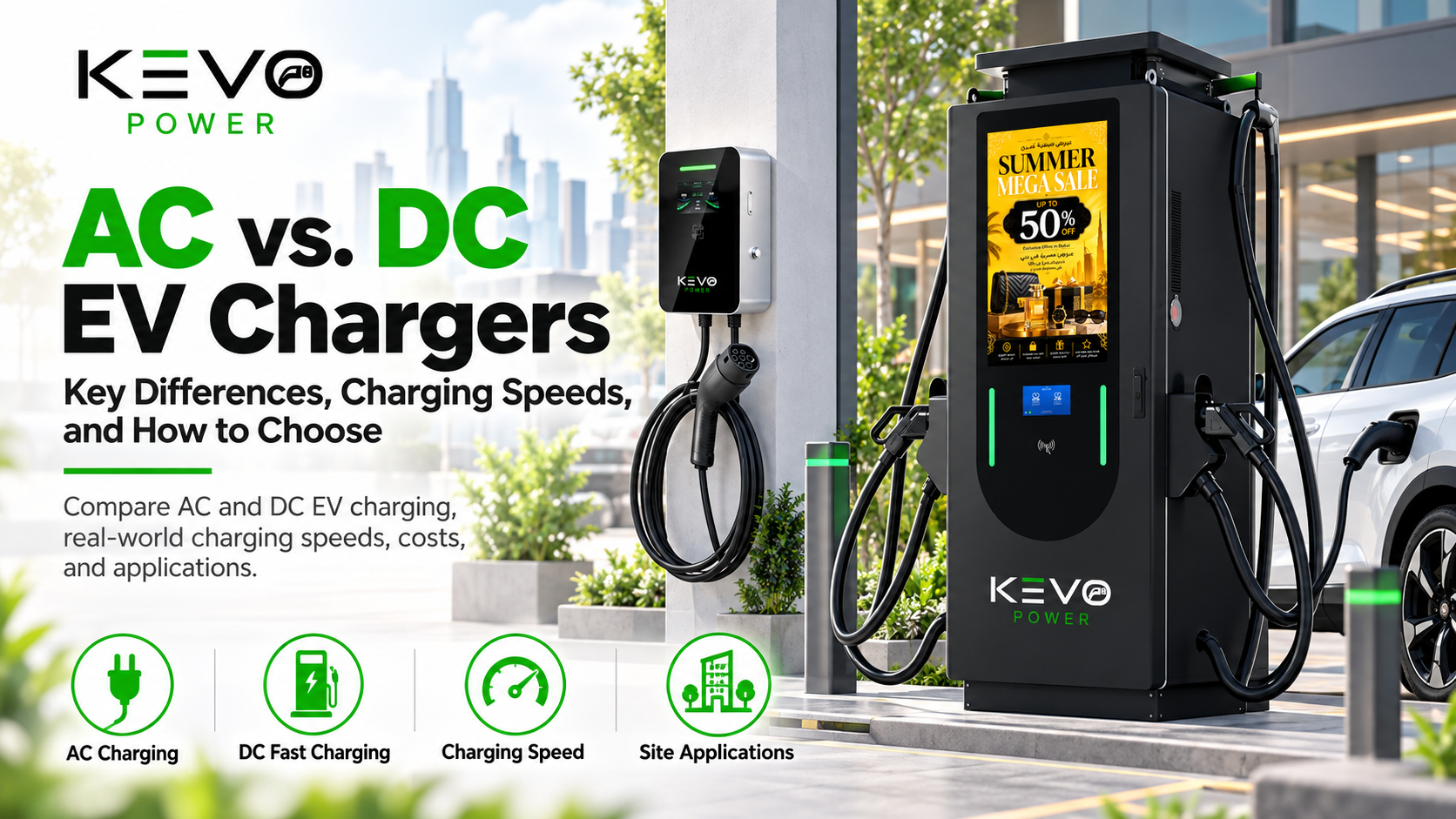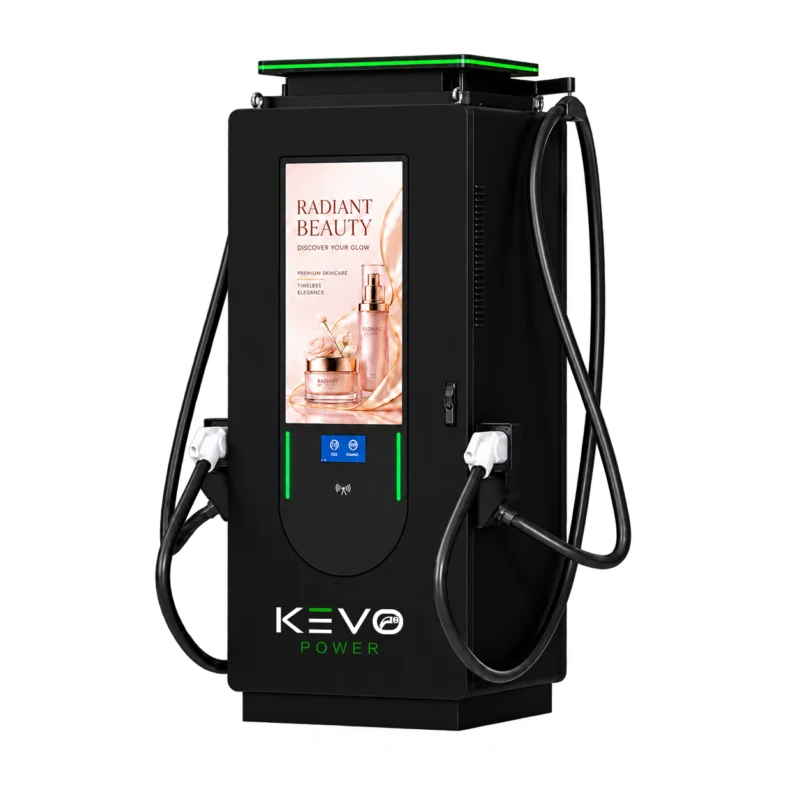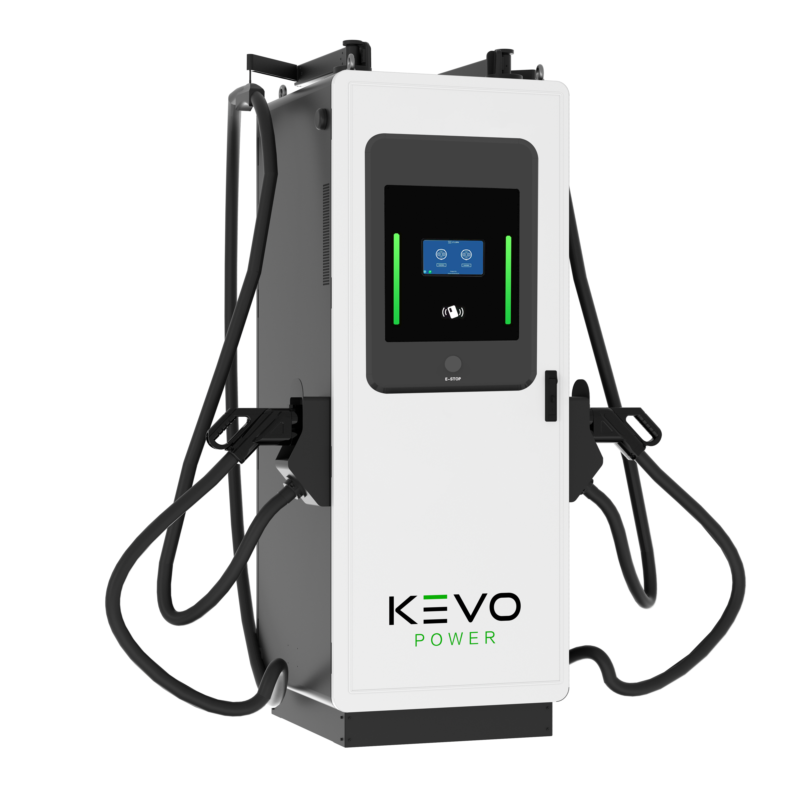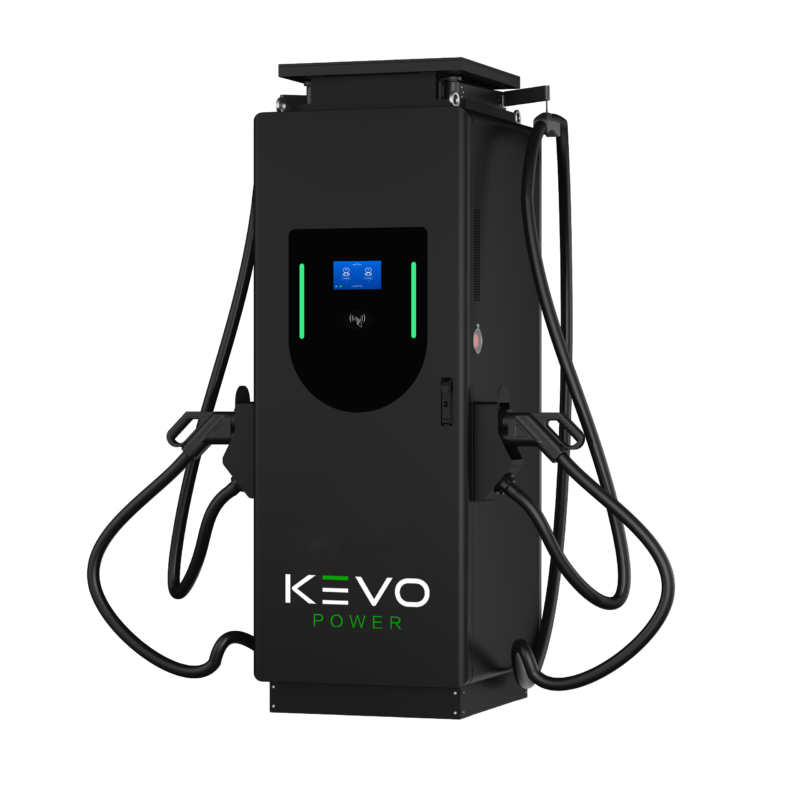
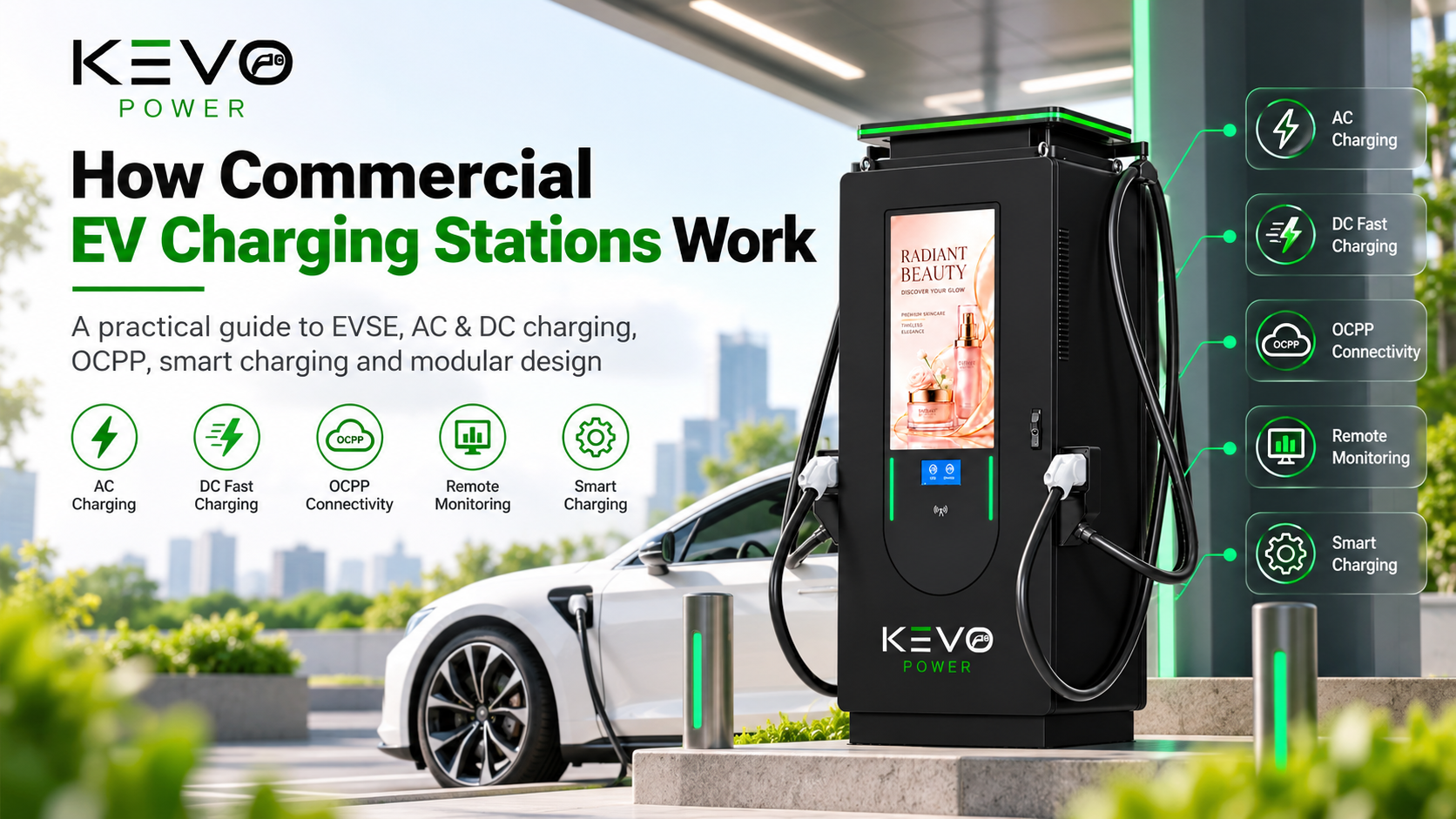
A commercial EV charging station transfers electricity from a site's power supply to an electric vehicle while coordinating safety checks, power conversion, charging limits, user access and back-office communication. The process differs between AC and DC charging, but every installation must match the vehicles, available site power, connector standard and operating model.
For property owners, fleet operators, charge point operators and distributors, charger power is only one part of the decision. Grid capacity, vehicle dwell time, expected energy demand, cable and connector limits, software compatibility and serviceability all affect the configuration that will work in practice.
This guide explains how EV charging works and what buyers should confirm before selecting a commercial EV charging solution.
What EV Charging Means
EV charging is the controlled transfer of electrical energy from an external source to a vehicle's high-voltage battery. The charger and vehicle communicate before and during the session so that power stays within the limits of the installation, cable, connector and battery system.
The term EVSE means electric vehicle supply equipment. In AC charging, the EVSE mainly controls and protects the supply while the vehicle's onboard charger converts AC power to DC. In DC fast charging, the charging station performs the conversion and supplies regulated DC power directly to the battery under the vehicle battery management system's instructions.
Main Components of a Commercial EV Charging Station

Grid Connection and Power Distribution
The site receives power from the utility or from a local energy system that may also include solar generation and battery storage. Switchgear, meters, transformers and distribution equipment deliver the required voltage and current to the charging equipment. A qualified electrical design must account for available capacity, simultaneous demand, protection coordination and local installation rules.
EVSE and Safety Hardware
The charger contains contactors, breakers, surge protection, current and voltage sensing, insulation or ground-fault monitoring, emergency stop functions and other safeguards appropriate to the product and charging standard. These systems check conditions before power is applied and continue monitoring the session after charging starts.
Power Conversion and Power Modules
AC chargers rely on the vehicle's onboard charger for AC-to-DC conversion. DC fast chargers use internal power modules to convert the site's AC supply into controlled DC output. In a modular DC fast charger, several power modules can operate together so the controller can allocate output according to vehicle demand and charger configuration.
Charging Cable and Connector
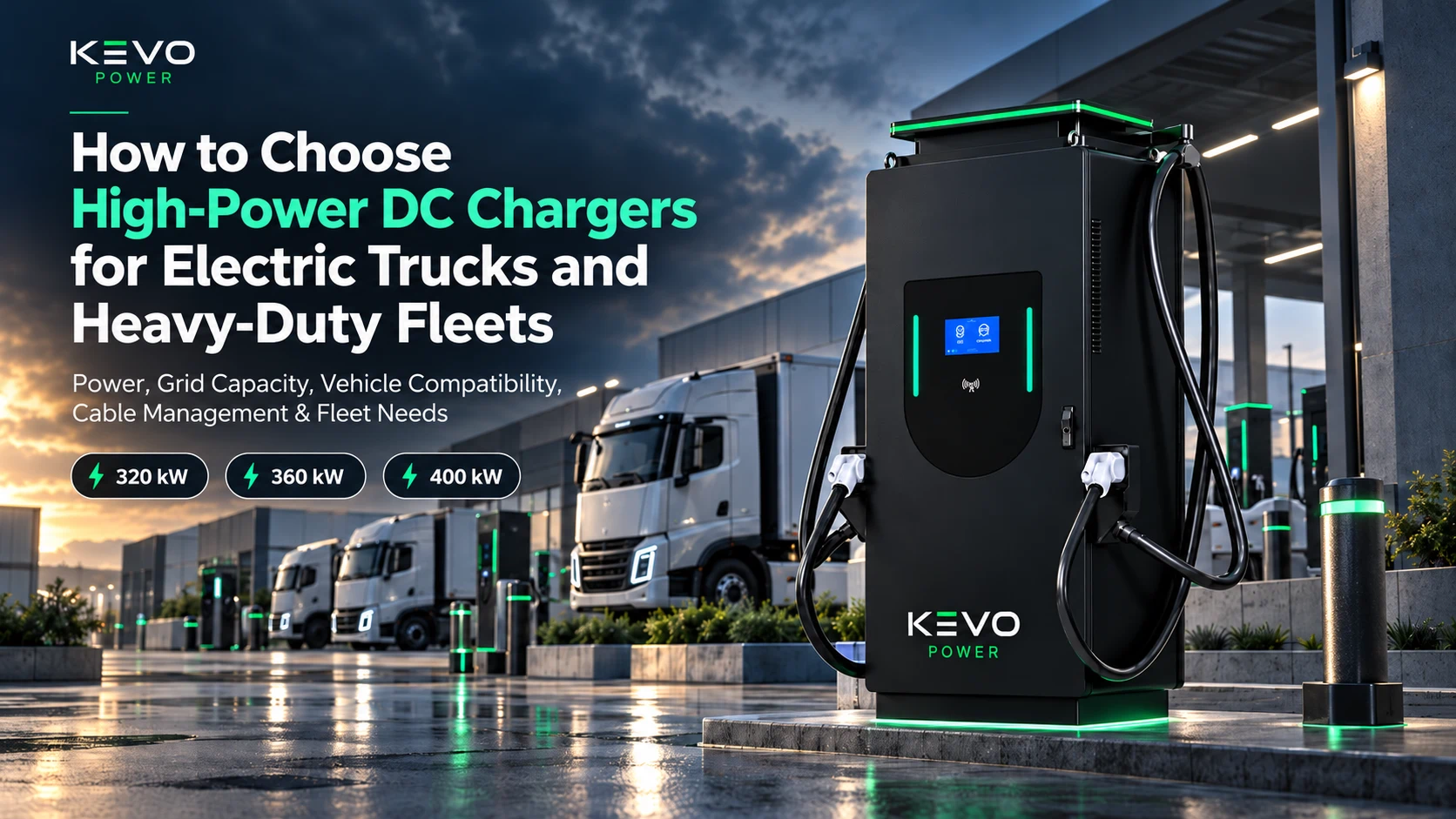
The cable and charging gun carry power between the station and the vehicle. Connector type, voltage rating, current rating, cable cooling and regional standards can limit the power that the system can deliver. High-power projects should confirm the complete charging path rather than looking only at the cabinet's rated kilowatts.
When evaluating high-power hardware, confirm how DC fast charger cables and connectors can limit charging power across the complete charging path.
Controller Communications and CSMS
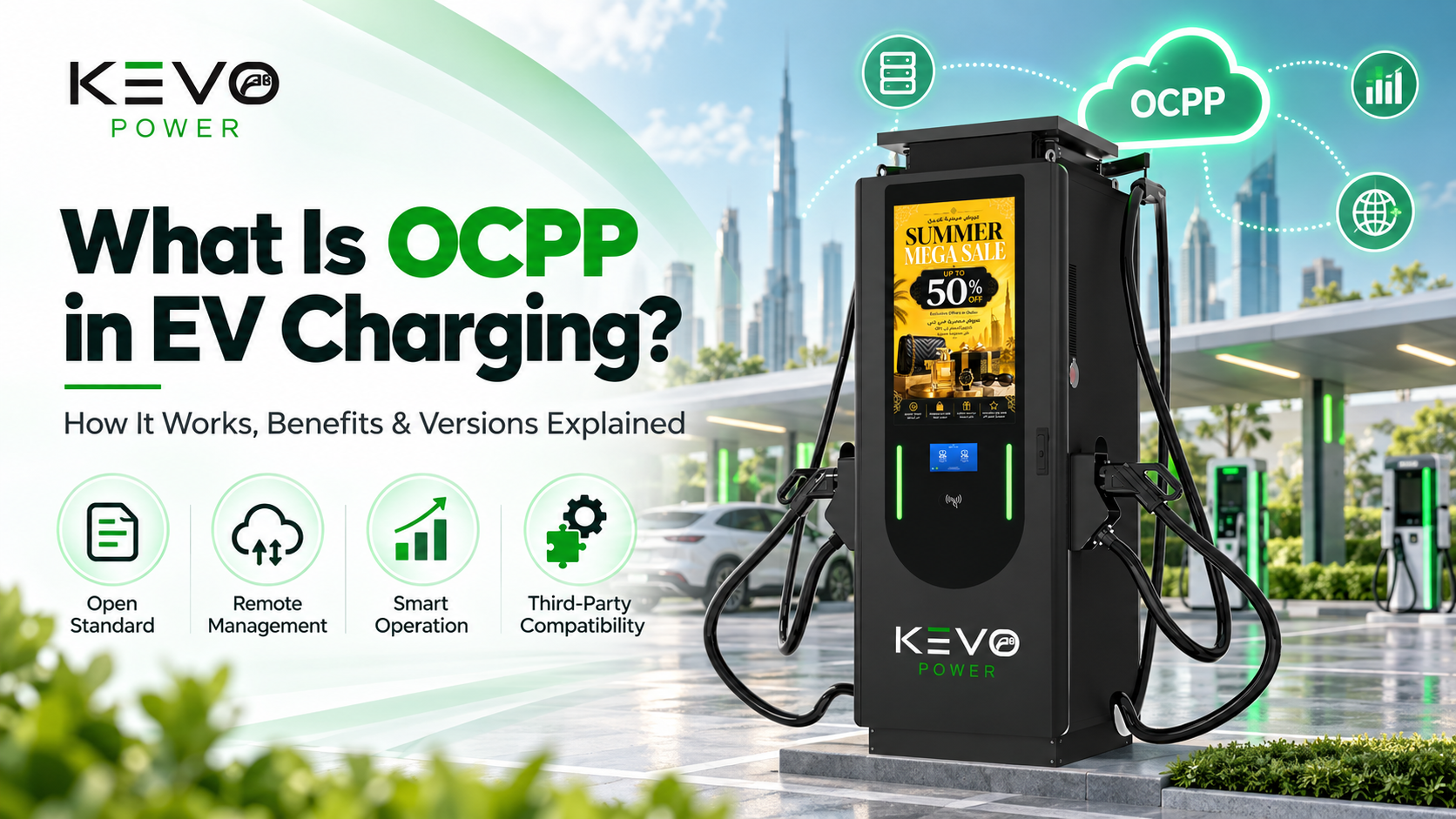
The local controller manages charger functions and communicates with the vehicle. A networked commercial charger may also connect to a charge station management system, or CSMS, for monitoring, user authorization, tariffs, reports and remote diagnostics. OCPP can support communication between compatible charging hardware and management platforms, but buyers should confirm the required OCPP version and features with both vendors.
How a Commercial EV Charging Session Works
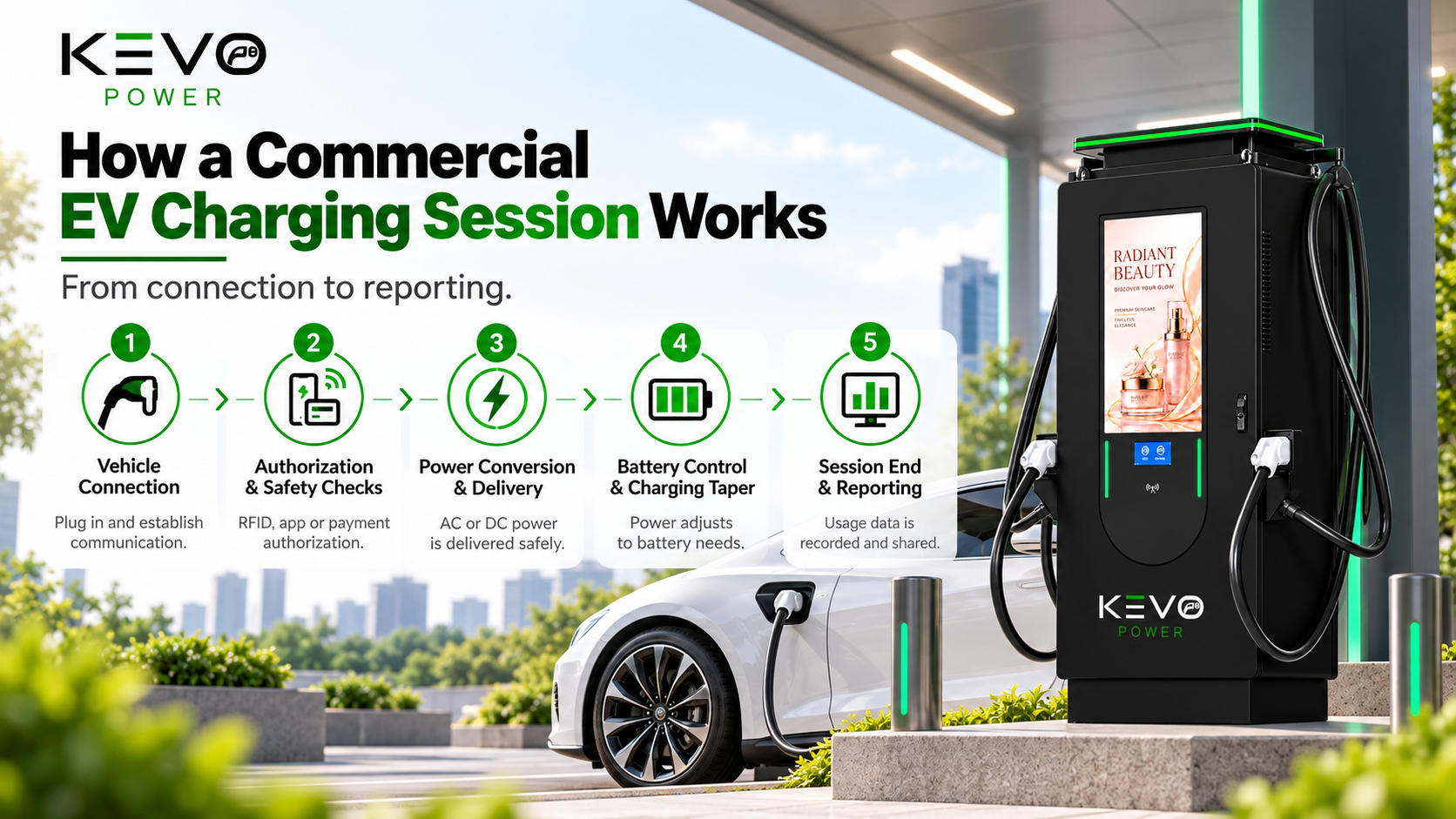
Step 1 Vehicle Connection and Communication
The driver connects the cable or inserts the vehicle connector. The charger detects the connection and begins communication using the method defined by the relevant charging standard. The vehicle and charger exchange information about connection status and permissible charging limits.
Step 2 Authorization and Safety Checks
If the site requires authorization, the driver may use RFID, an app, a payment terminal or another configured method. Before power flows, the charger performs the safety checks required by its design and connector standard. These may include ground or insulation checks, connector locking and verification that the electrical path is ready.
Step 3 Power Conversion and Delivery
For AC charging, the station supplies AC power and the vehicle's onboard charger converts it to DC. For DC fast charging, the station converts AC to DC, regulates voltage and current, and supplies the battery directly. The charger never forces unlimited power into the vehicle; output must remain within the active limits reported by the vehicle and enforced by the equipment.
Step 4 Battery Control and Charging Taper
The vehicle's battery management system monitors state of charge, cell voltage and temperature. It can request more or less power throughout the session. Charging power often tapers as the battery fills or when temperature limits are reached, so a charger's peak rating does not equal a constant charging rate.
Related guide: Does higher DC charger power mean faster EV charging.
Step 5 Session End and Reporting
The session ends when the driver stops charging, the vehicle reaches its target, or the system detects a condition that requires shutdown. A networked charger can send session data to the CSMS for operator records, billing and maintenance analysis.
AC and DC EV Charging Compared

| Decision factor | AC EV charging | DC fast charging |
|---|---|---|
| Power conversion | Inside the vehicle's onboard charger | Inside the charging station |
| Typical role | Residential, workplace, hotel and destination charging | Public fast charging, highway sites, fleet depots and high-throughput locations |
| Vehicle dwell time | Best when vehicles remain parked for longer periods | Best when shorter charging stops and higher energy delivery are required |
| Site requirements | Usually lower electrical demand per charging point | Higher power demand and more detailed grid, civil and thermal planning |
| Charging limit | Restricted by the EVSE and the vehicle's onboard charger | Restricted by the station, vehicle, cable, connector, battery and site power |
The right choice depends on how long vehicles park, how much energy they need, how often chargers will be used and what power the site can support. Many commercial projects combine AC chargers for long-dwell parking with DC fast chargers for vehicles that need faster turnaround.
Explore KEVO Power's AC EV charger solutions and DC EV charger solutions for available configurations.
What Determines Actual Charging Speed
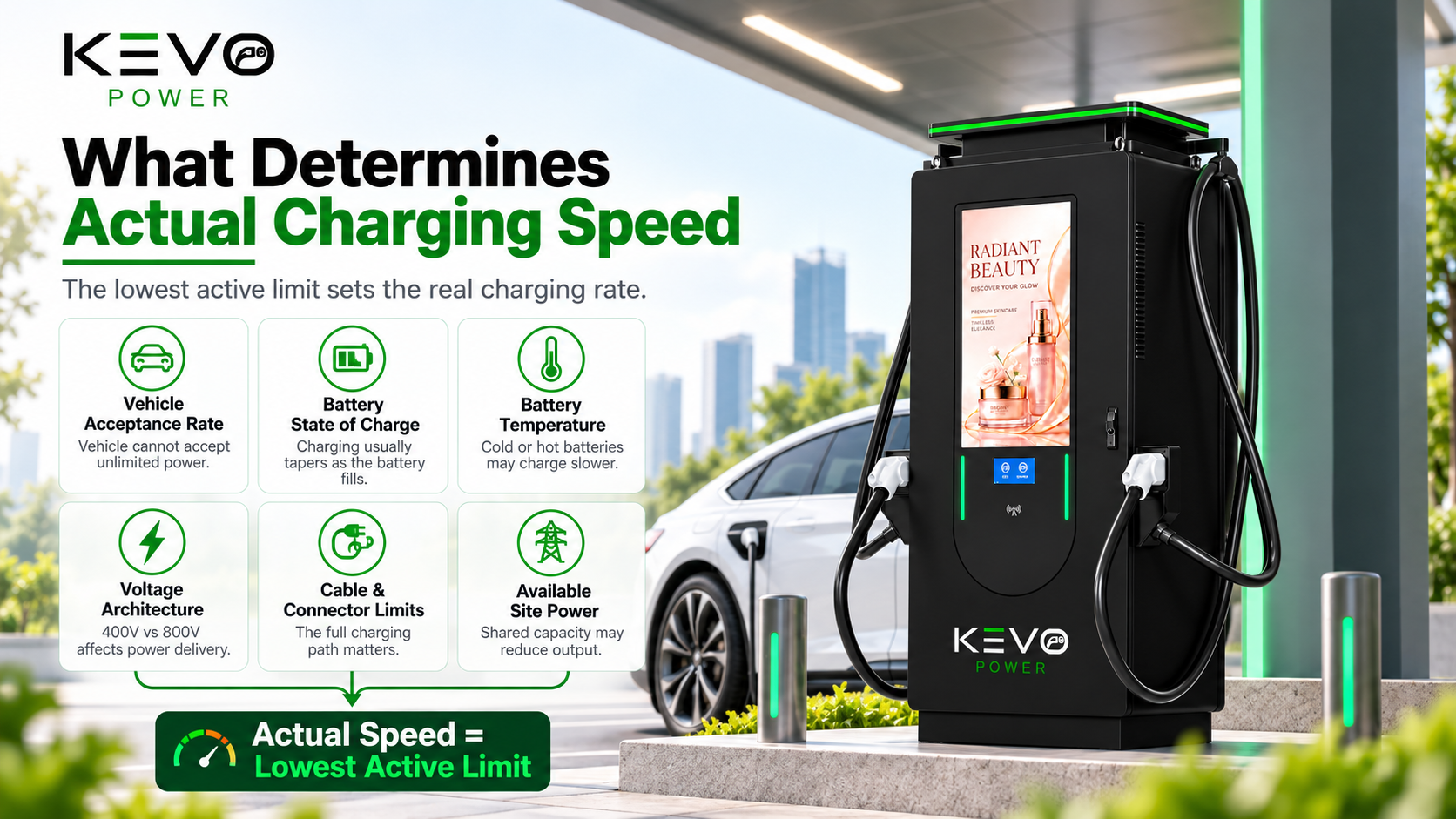
Actual charging speed is controlled by the lowest active limit in the system. A high-power charger may operate below its rated output when the vehicle cannot accept more power, the battery is cold or nearly full, the cable reaches its current limit, or the site is sharing capacity across several connectors.
- Vehicle maximum DC or AC acceptance rate
- Battery state of charge and temperature
- Vehicle voltage architecture
- Charger voltage and current capability
- Cable and connector current rating and cooling method
- Available site power and any dynamic load sharing rules
- Ambient temperature and equipment thermal limits
OCPP and Smart Charging for Commercial Sites

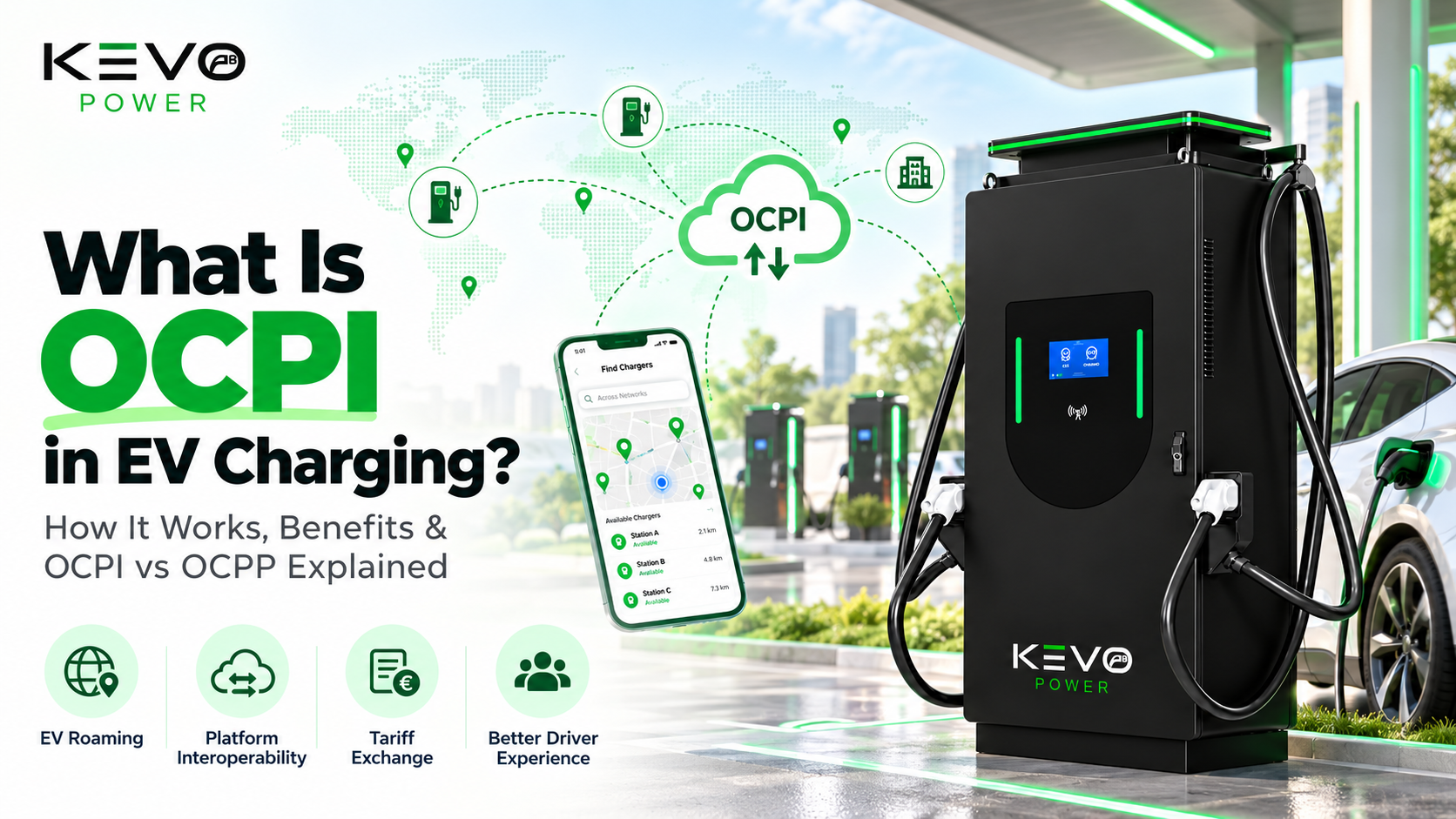
Commercial operators often need more than local charging control. A compatible CSMS can provide charger status, user management, tariffs, transaction records, fault alerts and remote support. OCPP is a common protocol for connecting chargers to back-office platforms, but compatibility should be checked by version and required function rather than assumed from the OCPP label alone.
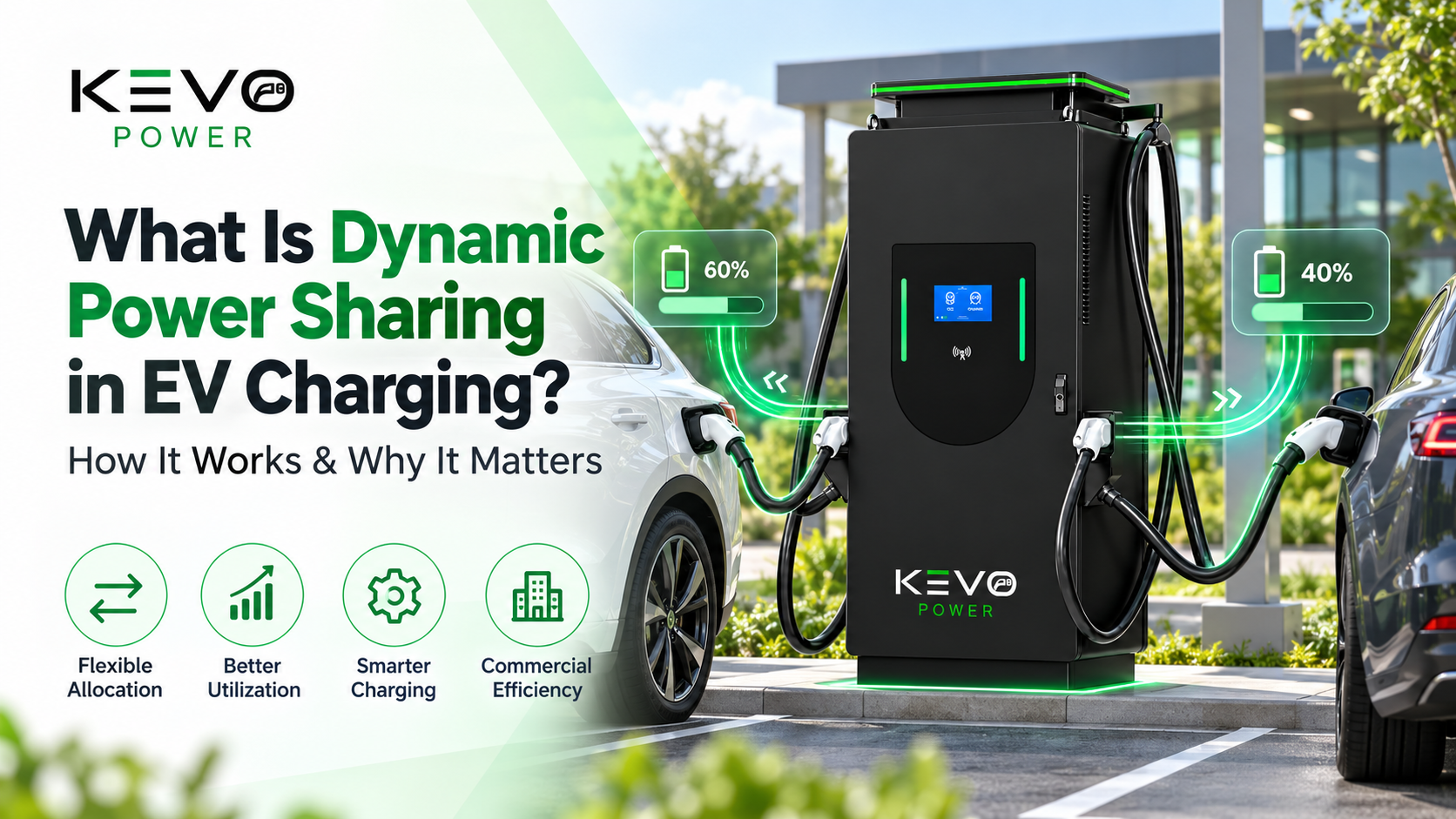
Smart charging and dynamic load management can distribute available capacity across several charging points. This can help a site stay within an agreed electrical limit, but it does not replace a grid study or guarantee that no utility upgrade will be required.
Why Modular Charger Architecture Matters
A modular DC charger uses separate power modules and replaceable functional assemblies rather than one integrated power stage. When the design supports field replacement, a technician may be able to isolate and replace the affected module instead of removing the entire charger. This can shorten service work and reduce the capacity lost during a single-module fault.
Modularity can also support flexible power allocation between connectors. Upgrade options, spare-parts strategy and field service procedures still depend on the specific model, so buyers should confirm them in the product documentation and commercial agreement.
Learn more about how full-module design can reduce idle charger time.
Commercial EV Charging Site Planning Checklist
A useful charger recommendation starts with the operating requirement, not a target kilowatt number. Before requesting a proposal, collect the following information.
- Vehicle types, battery sizes, charging standards and maximum charging rates
- Expected arrivals, dwell time, daily mileage and required energy per vehicle
- Number of charging points and whether simultaneous charging is required
- Site voltage, available electrical capacity and planned future expansion
- Required connectors and cable reach based on parking layout
- Indoor or outdoor conditions, temperature range and enclosure requirements
- Required OCPP version, CSMS, payment and user authorization functions
- Installation responsibilities, local approvals, spare parts and after-sales support
Review the latest KEVO Power catalogue and specification sheets before finalizing a model shortlist.
Frequently Asked Questions
Does a higher charger power rating always charge faster
No. The charging rate cannot exceed the lowest active limit set by the vehicle, battery, charger, cable, connector, temperature or site power. Peak charger output is useful only when the vehicle can accept it and the system can sustain it.
What is the main difference between AC and DC EV charging
AC charging sends alternating current to the vehicle, where the onboard charger converts it to DC. A DC fast charger performs the conversion inside the station and sends regulated DC power directly to the battery. AC charging suits longer parking periods, while DC charging supports faster turnaround and higher energy delivery.
Why does OCPP matter for a commercial EV charging station
OCPP can allow compatible chargers and management platforms to exchange operating and transaction data. This gives operators more flexibility when selecting a CSMS, but they should verify the protocol version and the exact functions supported by each product.
Can load management avoid a grid upgrade
Load management can keep combined charger demand within a configured site limit by sharing available power. Whether that removes the need for a grid upgrade depends on existing capacity, charging demand, local utility requirements and the project's expansion plan.
What information is needed for a charger quotation
Provide the destination market, vehicle types, connector standards, site input voltage, available power, required charger quantity, number of connectors, target charging time, software requirements and environmental conditions. These details make it possible to recommend a configuration instead of quoting an unsuitable headline power rating.
Discuss Your Commercial EV Charging Project
KEVO Power supplies AC and DC EV charging equipment for commercial properties, fleets, charging operators and distributors. Product selection should be based on the vehicle mix, site electrical conditions, charging demand, connector standards and software requirements.
For a configuration recommendation, contact the KEVO Power team with your project details, or ask on WhatsApp.