Introduction
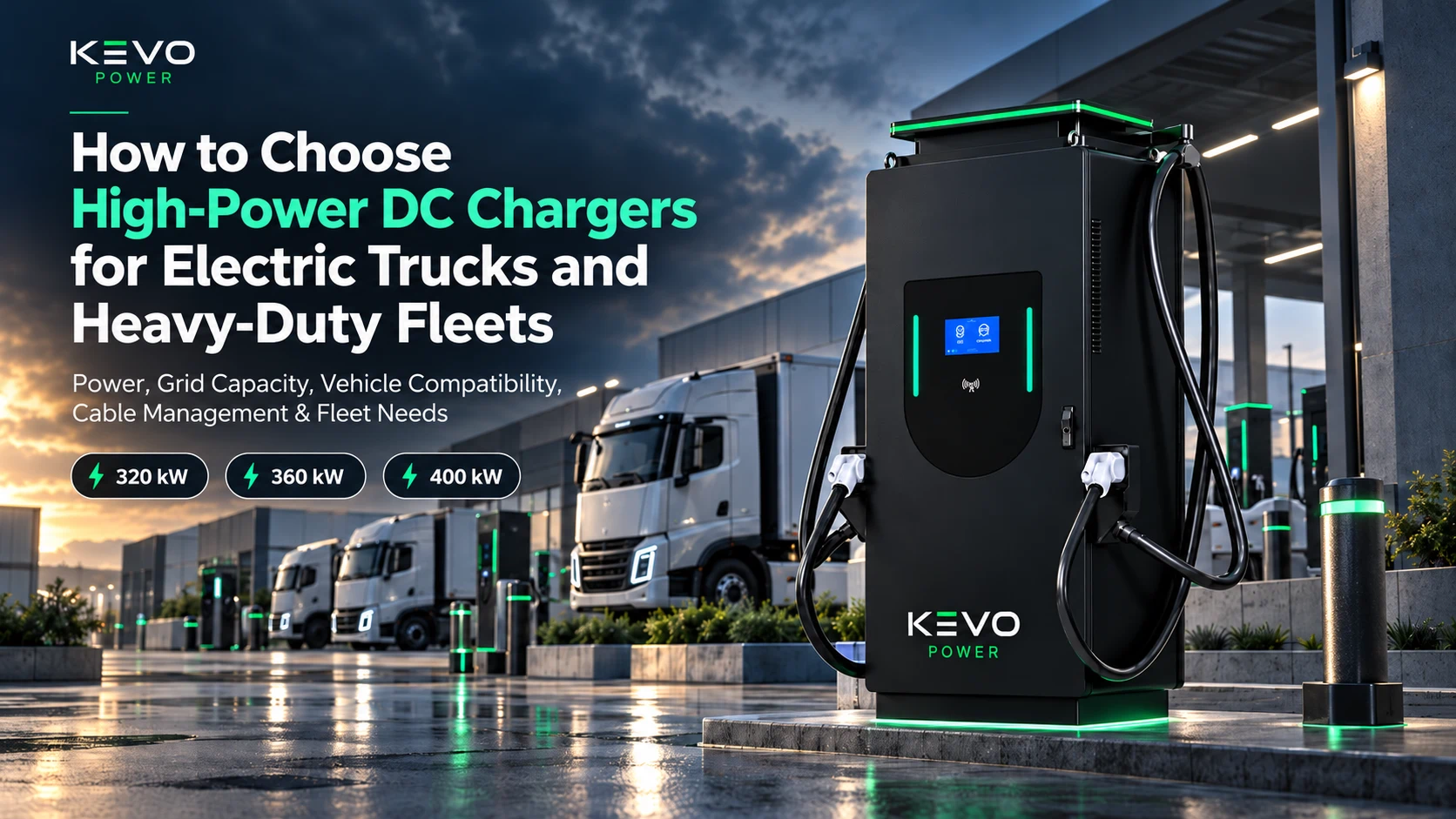
High-power DC chargers can help electric truck fleets meet demanding routes and limited charging windows when charger output, vehicle acceptance and site capacity are properly matched.
As the global transportation industry moves toward electrification, battery-electric trucks are becoming an increasingly important part of commercial logistics, freight transportation, and fleet operations.
From urban delivery trucks to heavy-duty logistics vehicles, electric trucks offer businesses an opportunity to reduce tailpipe emissions and transition toward more sustainable transportation.
However, charging heavy-duty electric vehicles presents different challenges from charging passenger cars. Electric trucks often have larger battery packs, demanding daily routes, limited charging windows, and specific operational requirements.
For fleet operators, choosing the right charging infrastructure is therefore a critical investment decision. Should a company install a 320kW, 360kW, or 400kW DC fast charger? How much electrical capacity will the station require? Can the charger communicate with the truck’s system? What about cable management, reliability, and future expansion?
In this guide, KEVO Power explores the key factors businesses should evaluate when selecting high-power DC chargers for electric trucks and heavy-duty fleets.
1. Why Do Electric Trucks Need High-Power DC Chargers?
Heavy-duty electric trucks may use battery packs containing several hundred kilowatt-hours of energy. Their energy consumption depends on vehicle weight, payload, driving conditions, terrain, weather, and auxiliary loads. Charging infrastructure must support the fleet’s schedule—not merely deliver a high headline power rating.
1.1 Larger Battery Capacity
Depending on the model, heavy-duty trucks may carry batteries of 300kWh, 400kWh, 600kWh, or more. Replenishing 240kWh at a constant 60kW would theoretically take four hours, while higher power could reduce that time if the vehicle can accept it.
1.2 Limited Charging Windows
- Overnight depot charging may offer several hours.
- Between-shift charging may require short turnaround periods.
- Highway facilities may need substantial energy delivery during scheduled rest stops.
1.3 Fleet Availability Requirements
Charging downtime can disrupt transport schedules. The best electric truck charger is not necessarily the most powerful model; it is the one that matches energy demand, charging windows, vehicle compatibility, and operating schedules.
2. How Much Charging Power Does an Electric Truck Actually Need?
Required average charging power (kW) = energy to be delivered (kWh) ÷ available charging time (hours). This simplified calculation excludes losses, charging curves, and thermal limitations.
Example: A Heavy-Duty Electric Truck
- Battery capacity: 600kWh
- Initial state of charge: 20%
- Target state of charge: 80%
- Energy needed: approximately 360kWh
- Available charging time: 90 minutes
- Ideal average battery charging power: 360kWh ÷ 1.5h = 240kW
Choosing a 240kW charger does not guarantee that result. Actual charging power depends on the truck’s battery management system, state of charge, battery temperature, vehicle acceptance limits, output voltage and current, connector ratings, charger thermal derating, and site restrictions.
3. Comparing High-Power DC Chargers: 320kW vs. 360kW vs. 400kW
3.1 320kW DC Fast Charger
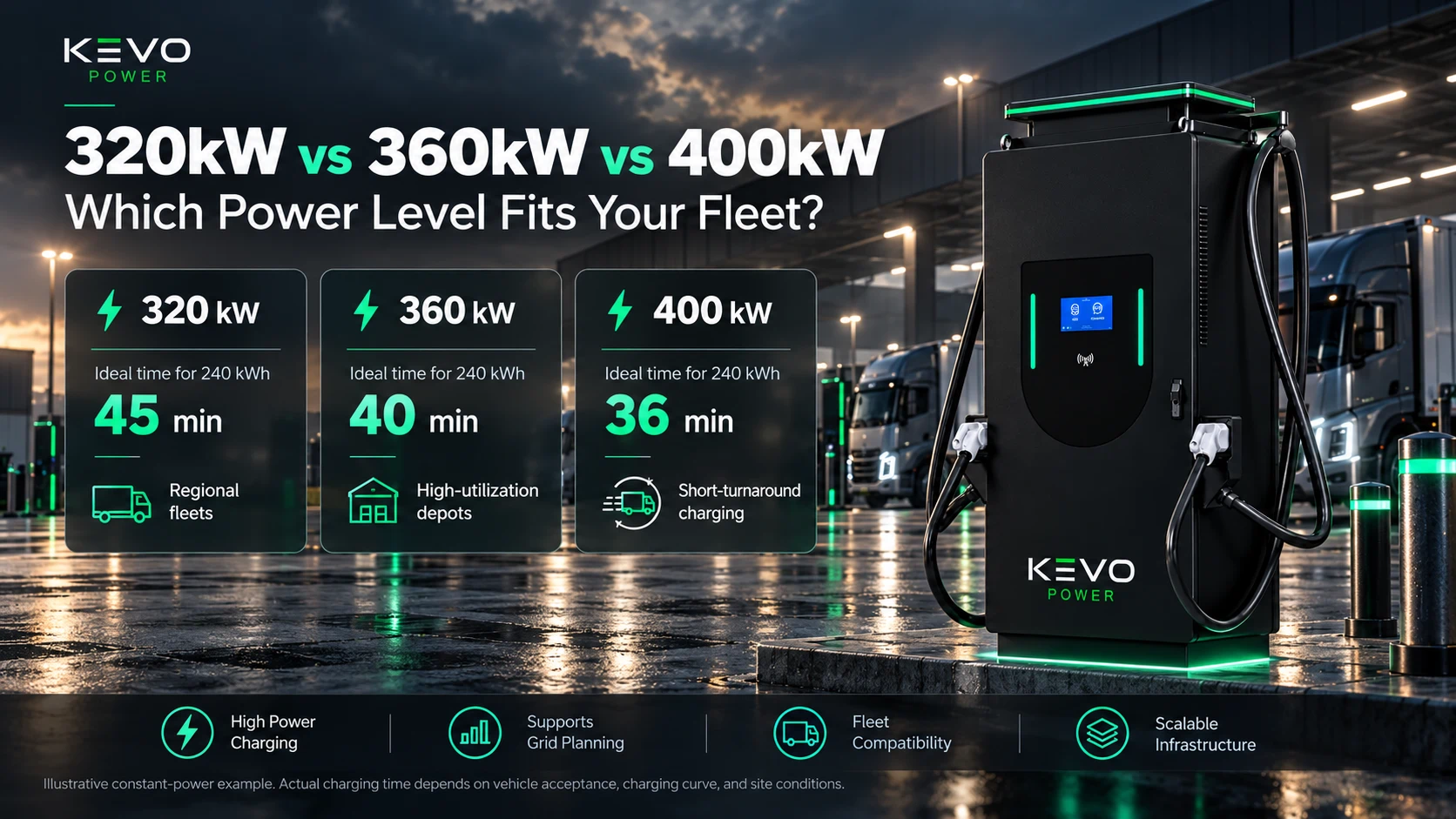
A 320kW charger can be considered for regional logistics depots, commercial truck parking, mixed vehicle facilities, and fleets with moderately short charging windows—subject to vehicle acceptance and connector limitations.
3.2 360kW DC Fast Charger
A 360kW model offers higher nominal output for higher-utilization depots, distribution centers, and public commercial charging sites. Its value depends on whether vehicles can benefit from the additional capacity.
3.3 400kW DC Fast Charger
A 400kW model may be suitable for demanding high-turnover fleet or highway applications, but the vehicle and electrical infrastructure must be capable of using that output.
Note: These are theoretical minimum times at constant full DC power, not measured KEVO performance. Actual sessions may take longer due to vehicle limits, charging curves, thermal derating, and losses.
A 400kW charger is not always better: for example, vehicles limited to approximately 250kW charging acceptance may gain little benefit from a higher charger rating.
| Rated DC output | Ideal time for 240kWh | Potential application |
|---|---|---|
| 320kW | 45 minutes | Regional logistics and commercial fleets |
| 360kW | 40 minutes | Higher-utilization truck charging |
| 400kW | 36 minutes | Short-turnaround high-demand charging |
4. Vehicle Compatibility: CCS2, CCS1, and Charging Specifications
4.1 CCS2 for Electric Trucks
CCS2 is widely used in Europe and other markets. Connector type alone does not establish the maximum power; the charger and vehicle voltage/current specifications must match.
4.2 CCS1 for North American Applications
CCS1 has been used in North America. Fleet buyers should verify the exact inlet and protocol fitted to each truck model, since regional and vehicle-specific configurations differ.
4.3 Check Voltage, Current, and Connector Ratings
A high rated output does not guarantee compatibility with every electric truck. Verify the vehicle inlet, communication requirements, charging voltage range, maximum DC current, and connector or cable ratings. For example, charging power is the product of voltage and current: at 800V, delivering 400kW requires approximately 500A before system limitations. Actual output depends on both charger and vehicle capabilities.
| Specification | What to verify | Why it matters |
|---|---|---|
| Connector type | Vehicle inlet and supported CCS configuration | Physical and communication compatibility |
| DC voltage range | Vehicle battery voltage and charger output window | Required charging operating range |
| Maximum DC current | Vehicle acceptance and connector/cable rating | Actual reachable charging power |
| Communication and tests | Vehicle-charger interoperability and commissioning tests | Practical integration reliability |

5. Grid Capacity for High-Power DC Chargers
5.1 Calculate Total Charging Load
Four chargers rated at 400kW each have 1,600kW (1.6MW) of combined maximum DC output. Assuming 95% conversion efficiency for illustration, full-output AC input would be approximately 1,600 ÷ 0.95 = 1,684kW before other facility loads. This is not a transformer-sizing calculation.
5.2 Transformer and Distribution Planning
- Transformers and electrical switchgear
- Protection, distribution panels, cabling, and conduits
- Metering and site-level energy management
- Civil works, permitting, and commissioning
5.3 Consult the Utility Early
Check available supply capacity, service upgrades, interconnection requirements, lead times, demand charges, tariffs, and future growth. Engage a qualified electrical engineer and the local utility before committing to equipment.
5.4 Consider Smart Load Management
Fleet depots may not need every charger at peak power simultaneously. Smart scheduling and load management can distribute capacity across vehicles in line with departure times and facility limits, where supported.

6. Cable Management for High-Power DC Chargers
Heavy-duty trucks may have hard-to-reach charging inlets, and high-current DC cables can be heavy. Poor routing can increase abrasion, inconvenience, and safety risks.
6.1 Cable Reach and Placement
Review truck dimensions, inlet positions, parking orientation, cable length, traffic clearance, and charger siting so that the cable safely reaches its destination.
6.2 Ground Contact and Cable Wear
Cable support arms, overhead systems, retractors, hooks, and appropriate holders can reduce unnecessary ground contact where compatible with the charger design.
6.3 Operator Convenience and Safety
An ergonomic system can improve frequent connection/disconnection tasks. Cables should not obstruct lanes or pedestrian routes, and equipment needs adequate impact protection and clearances.

7. Smart Charging and OCPP for High-Power DC Chargers
7.1 What Is OCPP?
OCPP (Open Charge Point Protocol) enables communication between charging stations and charging station management systems. Depending on implementation, it can support remote monitoring, session data, fault reporting, operational commands, firmware management, and smart charging.
7.2 Why Fleet Operators Care
A compatible backend can help operators monitor multiple chargers, review energy and charging sessions, and coordinate operations. Specific features depend on equipment, protocol version, and software.
7.3 Dynamic Load Management
A site controller may adjust charger limits in response to building demand or available grid capacity. Properly integrated management can help avoid unnecessary simultaneous electrical peaks.
7.4 Charging Schedules
A fleet manager might prioritize a truck leaving at 6:00 AM over trucks leaving later. Smart scheduling requires suitable backend support and should reflect each vehicle’s required energy.
8. Choosing High-Power DC Chargers for Different Applications
8.1 Logistics Distribution Centers
Predictable return and departure windows make coordinated overnight or between-shift charging practical. Consider route mileage, fleet size, simultaneity, and expansion.
8.2 Heavy-Duty Truck Depots
Large batteries and short turnaround periods increase the importance of voltage/current compatibility, cable handling, and electrical service.
8.3 Highway Charging Stations
Demand may be less predictable; prioritize availability, high-power vehicle compatibility, parking dimensions, reliable operation, and sufficient grid supply.
8.4 Electric Buses and Other Fleets
Some solutions may serve compatible buses or commercial vehicles, but each vehicle’s charging method and operating profile must be verified.
9. Evaluating the Total Cost of High-Power DC Chargers
9.1 Equipment Investment
Pricing varies with power level, module design, connectors, cooling, communication functions, and options.
9.2 Installation and Grid Connection
Engineering, transformer upgrades, switchgear, trenching, cabling, permitting, and commissioning can be substantial and vary by location.
9.3 Electricity Tariffs and Demand Charges
Energy prices and peak demand charges can materially affect fleet charging economics. Managed charging may reduce peaks where operations permit.
9.4 Maintenance and Availability
Assess warranty, spare parts, diagnostics, response arrangements, and local maintenance service. Downtime can affect fleet operations.
9.5 Future Expansion
Design early for fleet growth: parking layout, conduit, transformer capacity, cable routing, and space for added equipment.
10. High-Power DC Chargers Purchasing Checklist
- Rated combined DC output power
- Maximum output voltage and current
- Connector type and vehicle compatibility
- Maximum individual power per connector
- Simultaneous charging and power-sharing rules
- Cable length, reach, and support system
- OCPP version and backend integration
- Cooling, operating conditions, and derating
- AC input power and site infrastructure needs
- Warranty, service access, and replacement parts
Request full technical data and, where possible, compatibility or commissioning tests with the specific truck fleet.
11. KEVO Power High-Power DC Chargers for Commercial Fleets
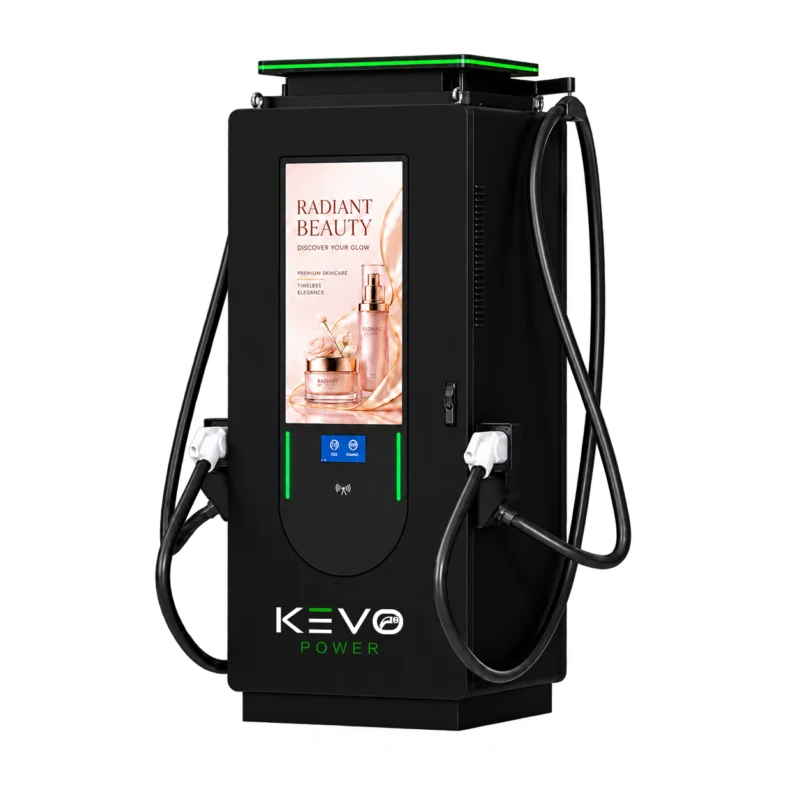
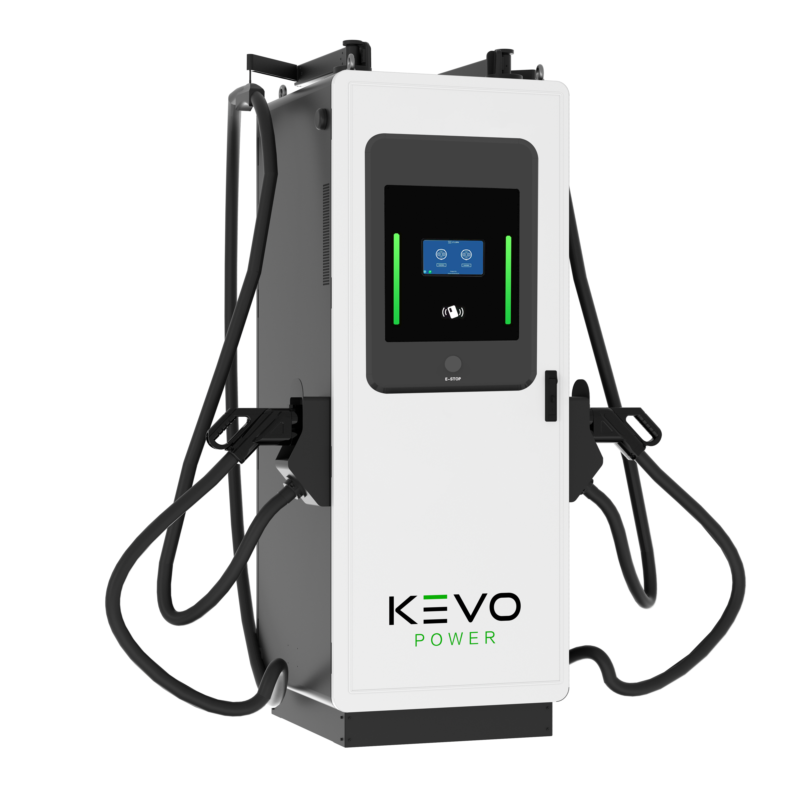
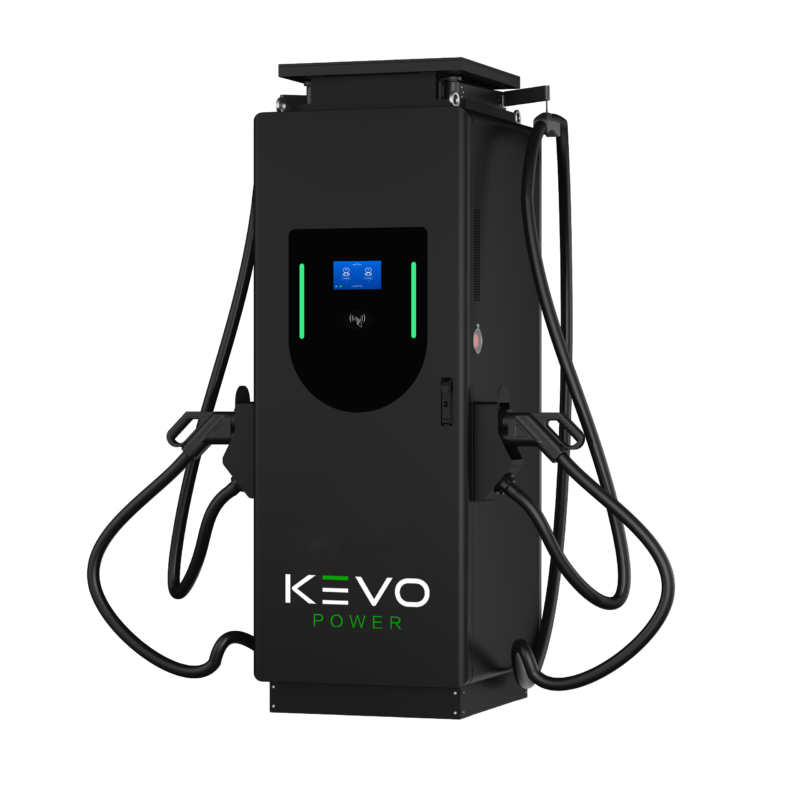
KEVO Power offers DC charging solutions for commercial and industrial applications. Its DC Series X family includes 320kW, 360kW, and 400kW rated options, which may be considered when planning compatible heavy-duty fleet charging projects.
The right selection depends on actual vehicle acceptance, connector type, output voltage/current, site electricity capacity, charging window, cable routing, OCPP integration, and future expansion. A higher rating is not automatically more economical.
For multi-connector installations, confirm individual output limits, simultaneous operation, power sharing logic, cable configuration, and compliance requirements for the specific KEVO model. A 400kW rating alone does not establish the connector current, voltage range, or vehicle compatibility.
Explore KEVO Power DC charging solutions at KEVO Power EV charging solutions or contact contact KEVO Power to discuss project requirements.
12. Frequently Asked Questions
Q1. What power charger is needed for an electric truck?
It depends on battery capacity, maximum vehicle acceptance, energy demand, and charging window. Some fleets can use lower power, while others may benefit from 320kW, 360kW, 400kW, or more.
Q2. Is a 400kW charger suitable for electric trucks?
It can be, provided its connector, voltage, current, and communication specifications match the truck and the vehicle can accept the output.
Q3. How long does 400kW charging take?
At constant 400kW, delivering 240kWh would theoretically take 36 minutes. Real-world sessions may take longer.
Q4. How do I choose between CCS1 and CCS2 for truck charging?
Choose the connector that matches the charging inlet and communication requirements of the actual truck model. CCS2 is common in Europe and other markets, while CCS1 has been used in North America. Always check the vehicle, charger, cable, voltage, and current specifications rather than relying only on region.
Q5. Can multiple electric trucks charge simultaneously?
Yes, where the equipment and electrical supply support simultaneous operation. Power may be shared or managed according to hardware and site limits.
Q6. Does a truck depot need a special transformer?
Not always. Requirements depend on available utility service and total electrical demand; an engineer and utility must assess the site.
Q7. Why is cable management important?
Heavy cables and challenging inlet positions make reach, handling, wear reduction, and safe routing important.
Q8. Can OCPP manage truck charging stations?
Compatible OCPP systems may support remote monitoring and smart charging depending on their implementations.
Q9. What is the best charger for a truck fleet?
The best choice matches vehicle specifications, routes, dwell times, power availability, costs, and growth plans.
Q10. Can solar and batteries support truck charging?
Yes. Appropriately designed solar and battery systems may support energy management, but economics depend on the site and tariffs.
13. Conclusion: Choose Charging Power Around Your Fleet
Electrifying heavy-duty fleets requires reliable, appropriately specified infrastructure. Fleet operators should evaluate batteries and charging curves, connector standards, grid capacity, cable handling, management software, total ownership cost, and growth—not just a charger’s headline kW rating.
The goal is not simply to install the most powerful charger. It is to build a charging system that keeps electric trucks moving efficiently and reliably.
KEVO Power Smart EV Charging Solutions | Contact our team